Reformed and Always Reforming, Part I: “Who in the What Now?”

A while back, while outlining my “Reading List,” I promised I would write more about a very important book to me, namely Roger Olson’s 2007 book, Reformed and Always Reforming: The Postconservative Approach to Theology.  I am now making good on that promise; however, rather than writing a short summary praising the book’s merits & interacting with any of its perceived shortcomings, I have decided (to follow Jesus!) to summarize THE ENTIRE BOOK for your consideration, which will require me to divide the posts into a number of parts. 

I’m not sure how many of our dear readers would be inclined to read the book for themselves, but I’d love to interact over the specifics of the approach he outlines in the comments section—I will even try to restrict my own editorial opinion to that location—because it is an approach that I am very seriously considering taking on as my own (to some extent).  To do this without input from my community would be foolhardy, in my highly-relational opinion.  So without further ado, I give you my post:  Reformed and Always Reforming, Part I:  “Who in the What Now?”

Olson’s central thesis in the book is that “it is possible to be more evangelical by being less conservative”—speaking specifically in this book about theology, which he defines as “reflection on divine revelation in order to believe rightly and understand what is rightly believed.”  He distinguishes between theology and doctrine:  “theology is process; doctrine is raw material and product.  Theology examines doctrines (beliefs about God) and produces doctrines, often by reaffirming, restating, or revising older ones.”  The last action of “revising” is central to the postconservative approach (or “mood” as he calls it) Olson will commend.

In the book, Olson sets up what kind of conservative he is “post” by describing his understanding of “conservative evangelical theology.”  The idea of being conservative is clearly connected to “adherence to tradition”—Olson posits that conservative evangelical’s (CE’s) have, perhaps unconsciously, established a “magisterium” that “exercises prior restraint over the critical and constructive tasks of theology” and while he acknowledges that many CE’s would deny this, “their conservatism shows in their tendency to slam down any and every new proposal for revisioning Christian doctrine” by an appeal to received traditional (or evangelical) beliefs.

He sees an example of a CE magisterium in the 1990 volume Evangelical Affirmations edited by Kenneth Kantzer & Carl F.H. Henry.  Olson perceives that this was an attempt to preserve “evangelical integrity [by] identifying who is ‘in’ and ‘out’ of the evangelical club” through establishing “firm evangelical boundaries.”  Throughout this collection of essays, “appeal is made repeatedly to…an alleged evangelical consensus” which Olson sees as something that would “be used in evangelical institutions in making decisions about hiring and continuing employment.”  In essence, it looks like a power play to consolidate the authority to identify who may call themselves an “evangelical.”  The problem with this is that it functionally places “a set of human statements on the same plane with scripture.”

In providing examples of specific conservative evangelical theologians, he divides them into two main camps:

  • Biblicist evangelicals:  those who “seem concerned to protect the propositional nature of revelation as primary and [who] seem to believe it is relatively easy with training and skill to move from biblical exegisis to establishment of sound doctrine without the aid of other sources and norms such as tradition, philosophy, or culture.”  They “tend to follow the methodology of 19th century Princeton theologian Charles Hodge” and Olson includes Carl F.H. Henry, J.I. Packer, Wayne Grudem, Millard Erickson, Norman Geisler, D.A. Carson and David F. Wells in this category.  Their approach contains the “idea that doctrines are to be mined out of the Bible and that evangelical doctrines are simply biblical teachings and not the secondary language of the church,” as well as a “frequent appeal to an evangelical faith once and for all delivered as a negative norm for ruling out new ideas.”
  • Paleo-orthodox traditionalists:  those who explicitly identify an “ancient, ecumenical doctrinal consensus” (sometimes including Reformational teachings, but usually based on the early church fathers) as a “governing authority for evangelical theology.”  These thinkers include Thomas Oden, D.H. Williams, and Robert Webber.

Olson also offers 10 features that he believes are common among conservative evangelical theologians which are a cause for concern to the postconservative approach (I’m not using quotes, but am condensing/editing Olson’s words in these sentences):

  1. A tendency to treat correct doctrine—orthodoxy—as the essence of authentic Christian faith and of evangelical faith, and a response to theological innovations as leading to apostasy.
  2. A tendency to treat revelation as primarily propositional, glossing over the personal and eventful nature of revelations as well as the revelational power of stories, images, and speech acts.
  3. A tendency to elevate some tradition to the status of a magisterium for evangelical theological identity (closing off fresh theological reflection & revisioning of doctrines).
  4. A suspicion of the constructive task of theology, rejecting or neglecting attempts to construct new doctrinal formulations or reconstruct old ones & a tendency to be defensive of their understanding of orthodoxy, patrolling evangelical boundaries.
  5. A view of evangelicalism as a bounded set category—within which it should be easy to tell who is in or out & a sense that they should have the authority to strip others of the evangelical label.
  6. A tendency to regard the “evangelical tent” as relatively smaller than the number of those who call themselves evangelicals.
  7. A high degree of suspicion towards both modernity (even though they may be influenced by it!) and postmodernity, which they see as relativistic and destructive of authentic Christian faith, which consists of absolutes known with a high degree of certainty.
  8. A tendency to think that it is possible to do theology relatively uninfluenced by history and culture (antihistoricist), and a recoiling from the idea that every doctrinal and theological formulation or method is culturally embedded, as they believe in and look for a transcultural expression of the gospel.
  9. A tendency to remain tied to fundamentalist roots (even though they would prefer not to use that term) in use of tactics such as harsh, polemical rhetoric and angry denunciations or ad hominum arguments when writing about fellow evangelicals with whom they disagree.
  10. A tendency to do theology in the grip of fear of liberal theology and insistence on placing every theologian or theological proposal on the spectrum of left to right as defined by attitudes towards modernity, with liberal theology representing maximal accommodation to modernity.

Olson also points to two “mediating evangelical theologians” who don’t totally fit into either camp:

  • Donald Bloesch, whom conservatives are fond of because of his strongly confessional stance and defense of traditional doctrinal formulations, but who can also be considered progressive because he denies biblical inerrancy and leans toward Karl Barth in a form of “evangelical neoorthodoxy.”
  • Alister McGrath, who is also defensive of traditional orthodoxy and reluctant to express support for theological innovation, but critical of the influence of modern rationalism on theology which craves certainty through empirical-historical evidences or logical deduction from a priori truths (rational presuppositions).

Olson ends his introduction by pointing out two groups which are vying for the attention of a new generation of evangelicals:  a fairly aggressive form of Reformed theology with a strongly Puritan flavor, influenced by Packer, R.C. Sproul, John Piper & Carson; and the emerging church network, led by Brian McLaren.

So now what does the postconservative approach look like?  That will have to wait until the next post.  However, since I’ve laid out so many names already, I will add those theologians whom Olson labels “postconservative” who are influenced by the last-generation theologians Bernard Ramm and Lesslie Newbigin, as well as philosopher Alasdair McIntyre, including:

  • Stanley Grenz (deceased)
  • Clark Pinnock (deceased)
  • Kevin Vanhoozer
  • John Sanders
  • John Franke
  • Nancey Murphy
  • James McClendon (deceased)
  • Miroslav Volf
  • Brian McLaren
  • Rodney Clapp
  • Greg Boyd

[Part II available here]
A modest proposal for Sufjan Stevens regarding the completion of his 50 States Project

Dear Sufjan,

The other day my friend Erin Hennessy saw you on the F train in NYC, but she couldn’t get up the nerve to say anything to you.  That got me thinking of what I would say to you if I ran into you (even though I never would, as I live on the other side of the country).  The first thing that came to mind was to talk to you about your 50 states project, which you began so beautifully with Greetings from Michigan: The Great Lakes State and Illinois/The Avalanche.

Now back in the day (the early two thousands or so), I took your proclamation to make an album (or EP, maybe?) for each one of the 50 states seriously, even though some of my more cynical friends would mock me saying it was impossible for you to do in your lifetime (they would start with some calculations, ask your age, etc. PS We share the same birthday!).  The reason I believed you was because I saw this limitless sort of creative genius in you, and even beyond that, it was as if you were the Emersonian “Poet” for this generation of Americans–seeing and showing us the beauty and agony and the divine in the everyday, transforming the mundane into the sublime, telling us stories full of wonder and longing and brilliant details from towns like Ypsilanti and Holland and Romulus.

You made me suddenly attentive to the people and places of America: you imbued them with a magical luster simply by naming them in the midst of your deeply moving, melancholic, and rich melodies and arrangements, or by inserting them amongst such evocative mystical lines of verse:

When the revenant came down
We couldn’t imagine what it was
In the spirit of three stars
The alien thing that took its form
Then to Lebanon, oh God!
The flashing at night, the sirens grow and grow
(Oh, history involved itself)
Mysterious shade that took its form
(Or what it was!), incarnation, three stars
Delivering signs and dusting from their eyes

-“Concerning the UFO Sighting Near Highland, Illinois”

All that to say that I really, really wish the 50 states project would continue–I think it could become one of the national treasures of our country for centuries to come, a Leaves of Grass for the 21st century that American kids would listen to to understand where they’ve come from and what kind of people we are.  I heard at one point that you said the 50 states project was “such a joke,” but I would challenge you in earnest, if only for the sake of those future little kids, to reconsider abandoning this momentous endeavor.

Realizing that it might very well be impossible for you to write and record all of the albums yourself, what if you instead became the director of the project–you have set the standard quite high with your first two albums–and with the profound respect you have from your artistic peers, I honestly believe you could rally together the best artists from each state to collaborate with to make this happen, creating a kind of ark of American culture.

Here are some suggestions to begin with (I admit some may be wishful thinking) & I call on any reader to add to/better the selection of songwriters for any state (I have put brackets around bands with whom I have only a cursory familiarity & some states I have absolutely no idea about):

  • Alabama = The Snake the Cross the Crown
  • Alaska = Portugal The Man
  • Arizona = Calexico
  • Arkansas = ???
  • California = Elijah Wade Smith, Beck, Stephen Malkmus
  • Colorado = DeVotchKa, The Apples in Stereo
  • Connecticut = Rivers Cuomo?
  • Delaware = The Spinto Band
  • Florida = Iron & Wine, Aaron Marsh
  • Georgia = Deerhunter, Of Montreal, Bill Mallonee
  • Hawaii = Mason Jennings
  • Idaho = Built to Spill, Finn Riggins
  • Illinois = Sufjan Stevens
  • Indiana = Mock Orange
  • Iowa = Caleb Engstrom
  • Kansas = Drakkar Sauna, Mates of State, The New Amsterdams, The Appleseed Cast
  • Kentucky = Bonnie “Prince” Billy, My Morning Jacket
  • Louisiana = Jeff Mangum, Mutemath
  • Maine = [Phantom Buffalo]
  • Maryland = John Vanderslice, Wye Oak
  • Massachusetts = Lou Barlow, Winterpills
  • Michigan = Sufjan Stevens
  • Minnesota = Low, Cloud Cult, Lucky Wilbur
  • Mississippi = ???
  • Missouri = [Someone Still Loves You Boris Yeltsin]
  • Montana = Colin Meloy
  • Nebraska = Cursive, Bright Eyes
  • Nevada = The Killers?
  • New Hampshire = [Wild Light]
  • New Jersey = Sufjan Stevens (?), Danielson, Yo La Tango
  • New Mexico = The Shins, Beirut
  • New York = The Magnetic Fields, Sonic Youth, Interpol, The Walkmen
  • North Carolina = The Mountain Goats
  • North Dakota = [The White Foliage]
  • Ohio = Robert Pollard, Over the Rhine, The National, Mark Kozelek
  • Oklahoma = The Flaming Lips, Kings of Leon
  • Oregon = Laura Veirs, M. Ward, Miles Benjamin Anthony Robinson, The Decemberists
  • Pennsylvania = The Innocence Mission, Denison Witmer, Matt Pond PA
  • Rhode Island = The Low Anthem, Death Vessel
  • South Carolina = Band of Horses
  • South Dakota = Haley Bonar
  • Tennessee = Derek Webb
  • Texas = Josh T. Pearson, Ramesh Srivastava (formerly of Voxtrot), The Polyphonic Spree, Okkervil River, Devendra Banhart
  • Utah = [Joshua James]
  • Vermont = Anais Mitchell
  • Virginia = Thao Nguyen, Hush Arbors
  • Washington = David Bazan, Damien Jurado, Jeremy Enigk, Fleet Foxes
  • West Virginia = ???
  • Wisconsin = Bon Iver, Marla Hansen
  • Wyoming = ???

With the deepest respect & admiration,

Greg Stump

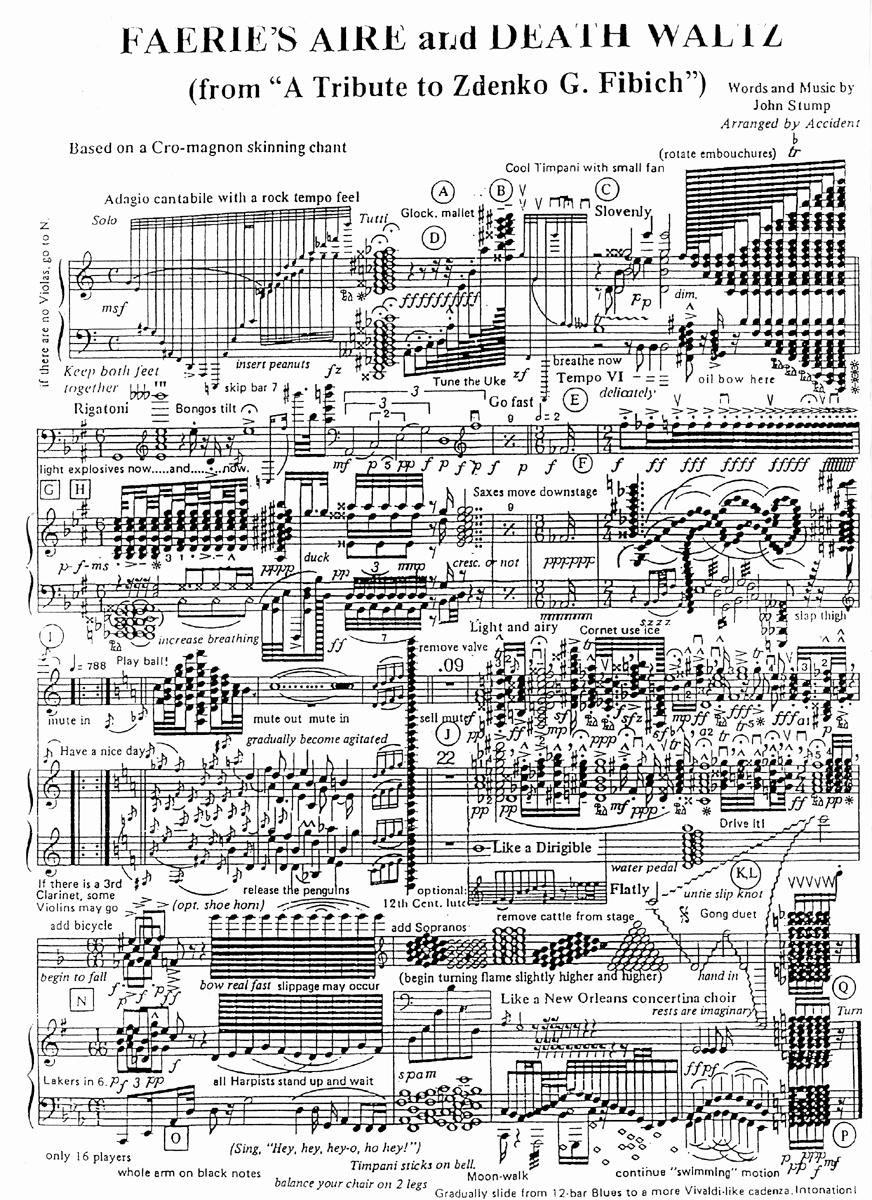
John Stump, composer of Faerie’s Aire and Death Waltz

My uncle, John Arthur Stump, who was my father’s youngest brother, died on January 20, 2006.  His memorial service was held at a Vedanta monastery in Hollywood, where my other uncle (known there as “Jnana Chaitanya,” but to me as Uncle Dave) serves as a monk.  I was not at the ceremony, but my family brought back some memorabilia from the service and from Uncle John’s “estate,” including a large piece of paper densely printed with musical notation.

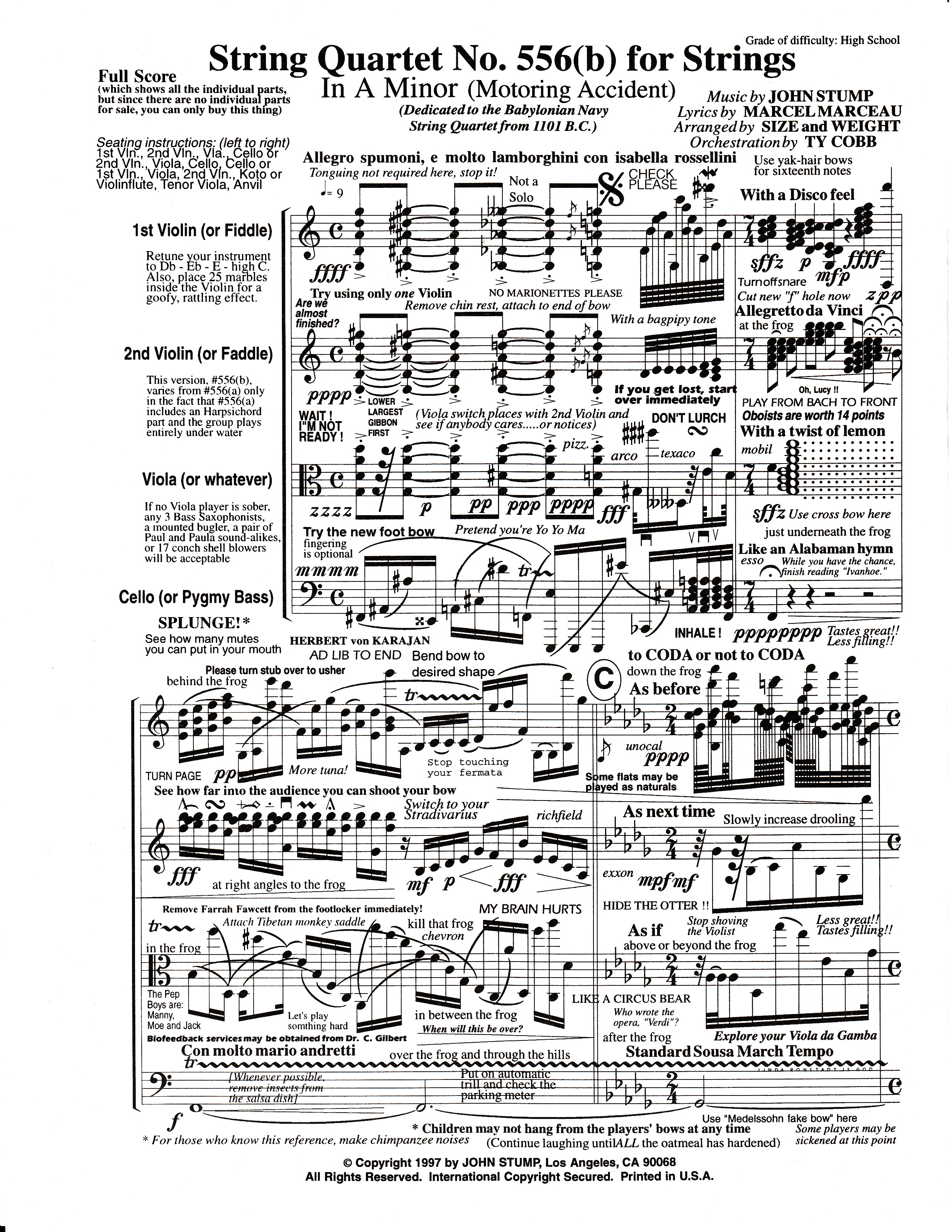
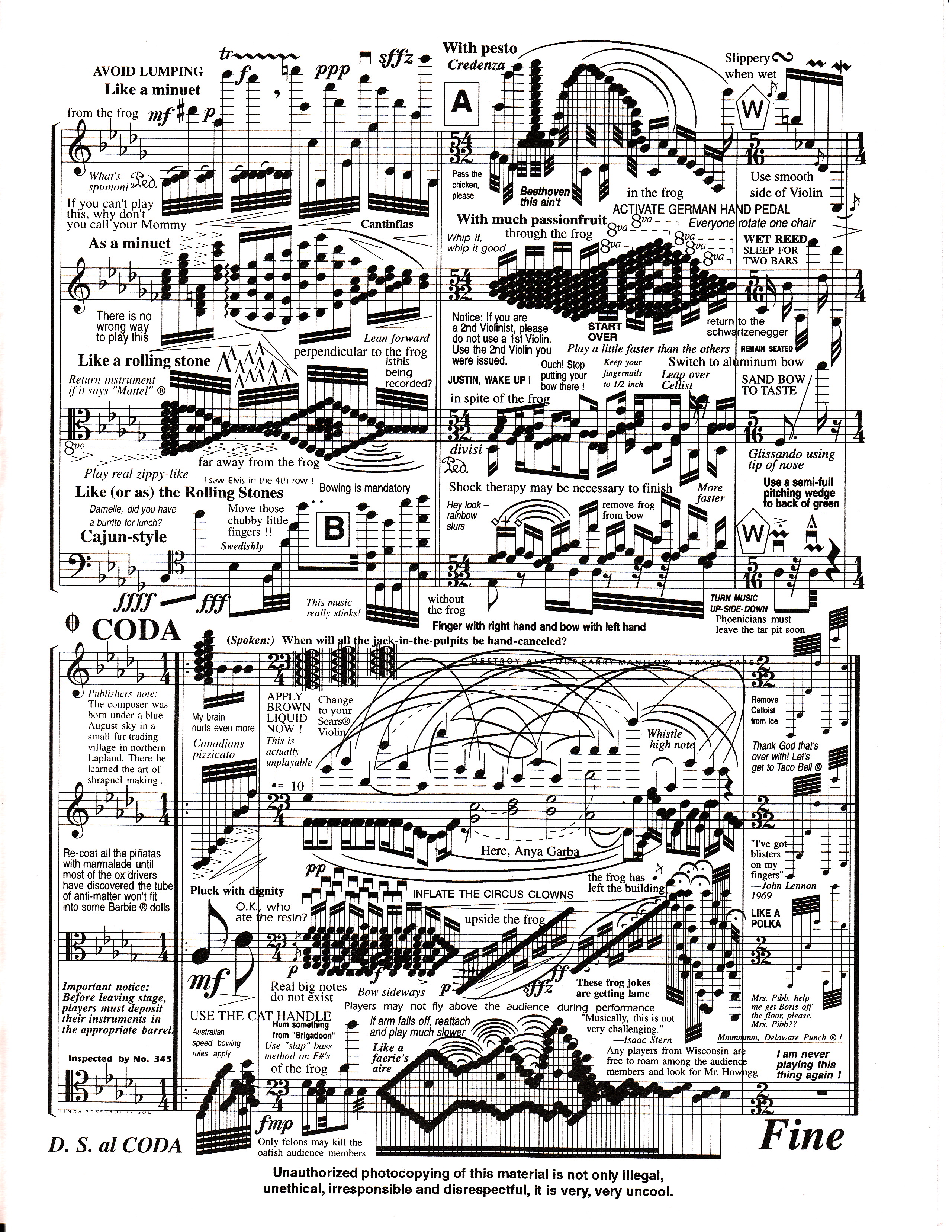
It was a sheet of music for a work entitled “Faerie’s Aire and Death Waltz (from ‘A Tribute to Zdenko G. Fibich’)” that John had put together, obviously as an unplayable and satirical parody.  The notations on the score included absurd directions such as “release the penguins” and “Like a Dirigible” and “Gong duet.”  It was an incredibly creative, erudite and rigorous act of nonsense, which felt completely consistent with other creations I had seen from my uncle.  He was famous in our family for his non-sequiturs (sending a sympathy card from a fictitious professor to me on Christmas), stippling artwork, and his fascination with music.  He had worked in the field of “music engraving” for most of his life, beginning in 1967, and I remember looking with fascination at his “music typewriter” in his office in my grandmother’s garage, so it didn’t surprise me that Uncle John would have created something like this fake musical piece.

What surprised me was the fact that this piece was actually something of a musical legend, but to my knowledge, Uncle John had never mentioned it to anyone in my family before.  When I received the copy of “Faerie’s Aire,” I showed it to one of the college students I worked with who was a music major (who has become a talented composer in his own right!) and he told me he remembered seeing this piece posted on the band room wall when he was a high school student…in Washington!  I asked some other musician friends and they all told me they had seen it as well.  When I searched the internet, I found it rife with references, accolades, imitations, and questions about the mysterious composer, John Stump.  It saddened me to think there was nothing that revealed anything about my Uncle John’s life in the public sphere, so I thought I would provide some facts & anecdotes here that could serve as a source on this brilliant, hilarious, and reclusive man.

  • John was born to Homer & Mildred Stump on March 24, 1944 in Kansas City, Missouri.
  • He grew up in Lakewood, California, studying composition and orchestration at Long Beach City College.
  • John also attended Cal State University Long Beach, where he played French Horn in an orchestra led by Aaron Copeland.
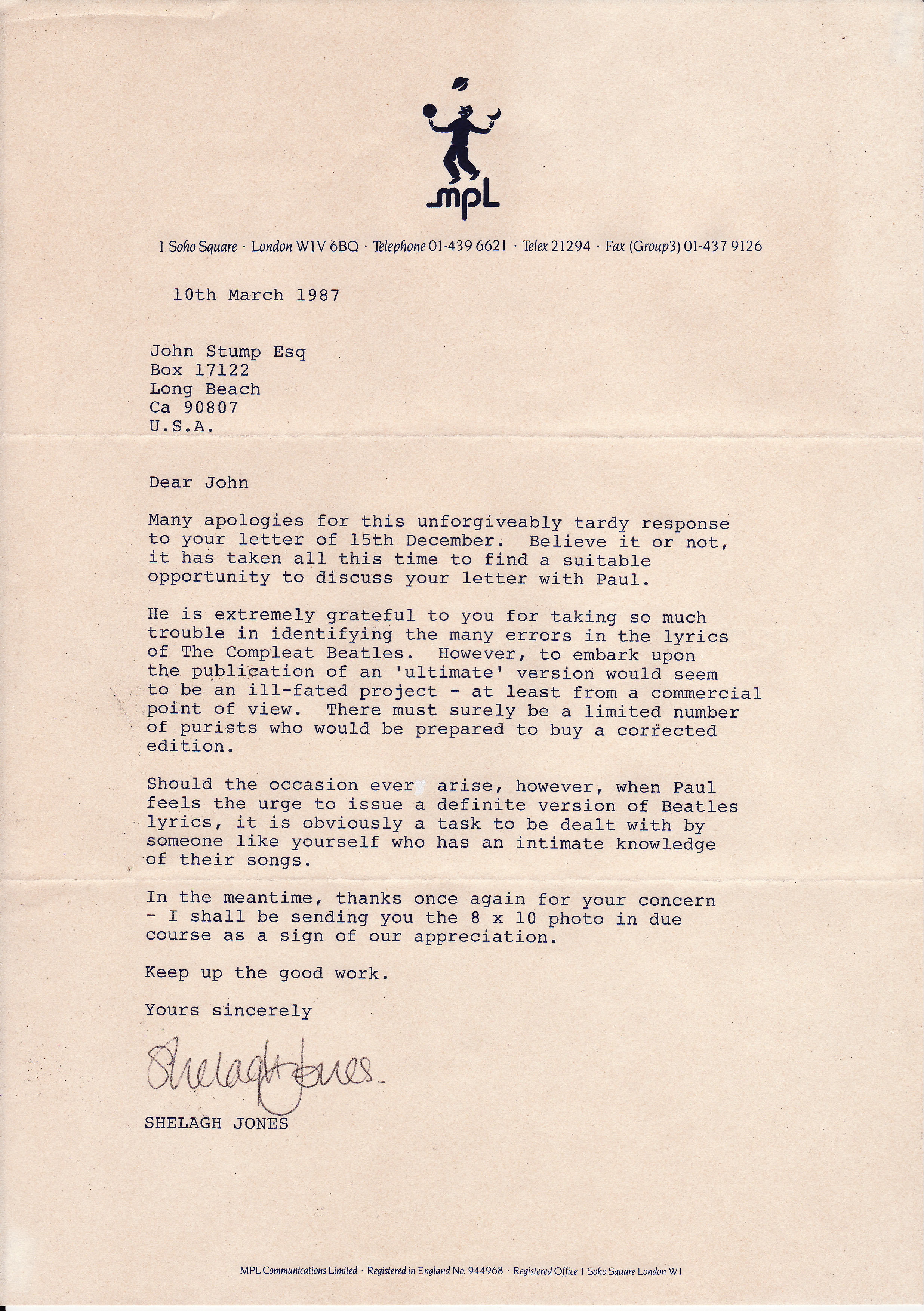
  • He was an obsessive fan of many musical groups (Beach Boys, The Carpenters, Olivia Newton-John, The Go-Go’s), but none more than The Beatles.  He actually sent corrections to the early 1980’s published Beatles song collection “The Compleat Beatles” because he knew the minute details of the songs and scores so well (Uncle John would also test me when I was a kid on who wrote which Beatles song, as well as on which songs Paul played instruments other than the bass, etc.).  Though John loved all the Beatles, the one who shared his name was obviously his favorite…
A letter from Paul McCartney's personal assistant to John
  • The only known composition of John’s to be publicly performed was a three-part work for men’s choir based on the Dylan Thomas poem “And Death Shall Have No Dominion” (of which I have a cassette recording somewhere) which was put on by a choral group at the Vedanta Society in Hollywood.  He also wrote “A Suite for Four Trombones and Four Trumpets” and he mentioned to me that he had written a pop song for Karen Carpenter (he knew a friend of her’s through CSULB) but nothing ever came of it.
  • Finally, John was a large man…by that, I mean profoundly obese, which may have contributed to his public shyness.  I often felt like he actually had something of a disdain for society and didn’t care what people thought about him, but to those who knew him, he was a thoughtful, funny, and brilliant man.  It’s sad that he was never able to see his talents and creativity celebrated while he was alive…perhaps he would have preferred a mysterious posthumous legend to any kind of recognition in his life.  Whatever the case, I applaud you Uncle John and happy 66th birthday on the 24th!

UPDATE:  I have posted more material and images regarding John here.  Enjoy!

Sources:  some background information taken from John’s obituary in “Vedanta Voices” Vol. 8, No. 3, March 2006, along with John’s “A Family History”.

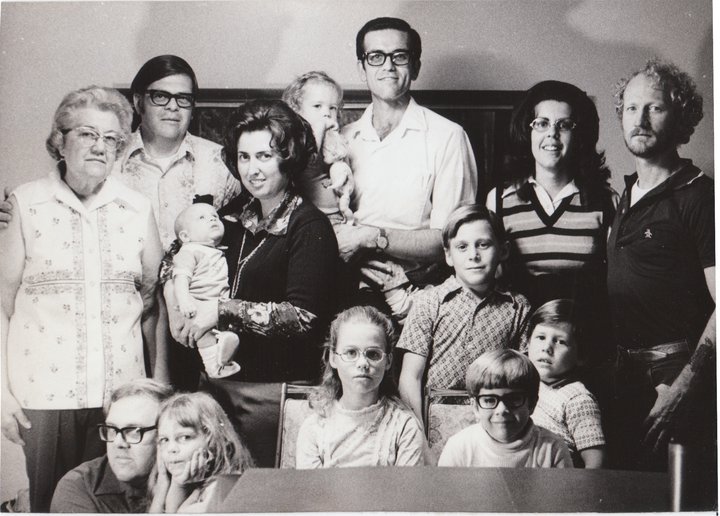
The Stump family circa 1976. John is in the lower left hand corner…

UPDATE:

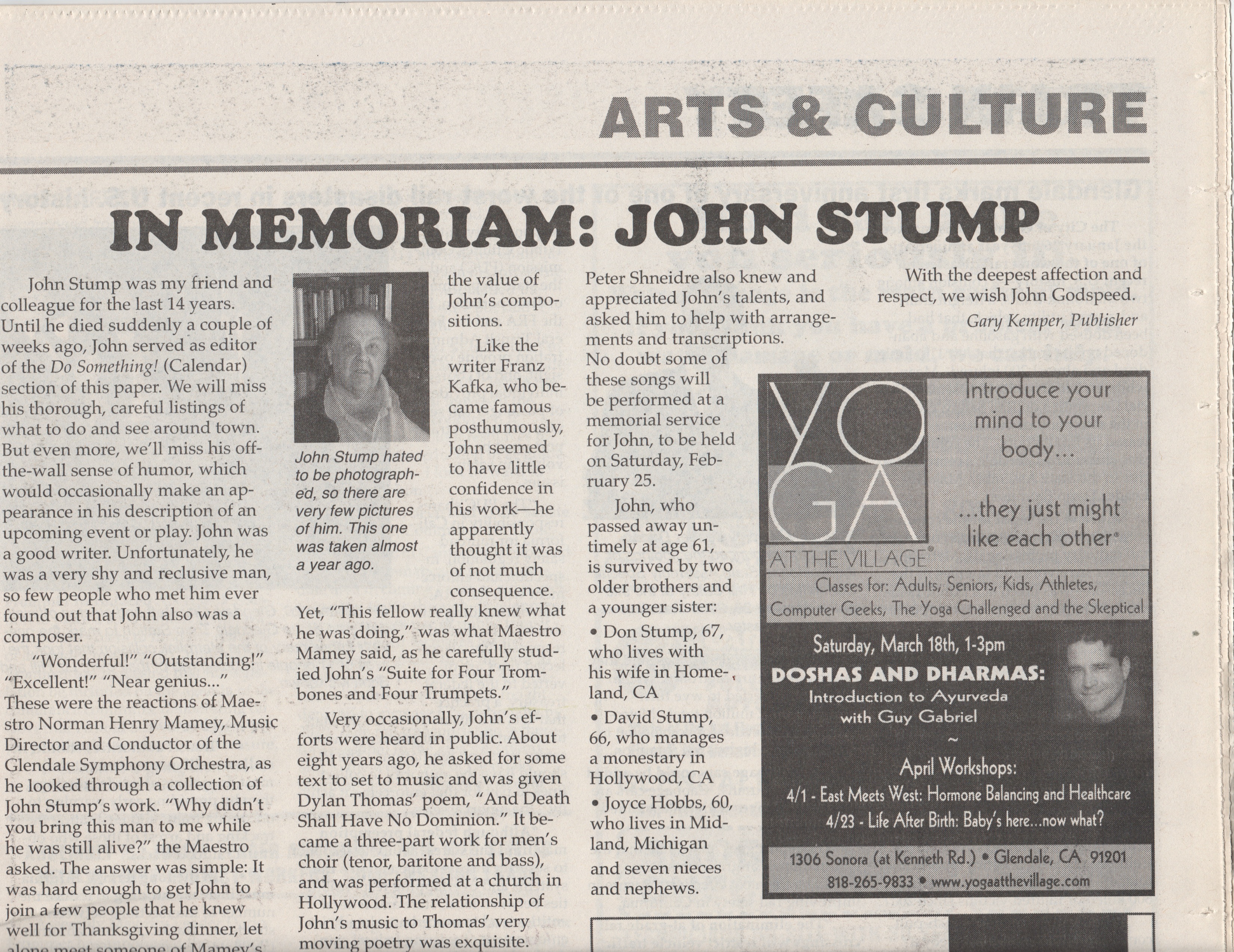
-Here is a copy of an obituary from page 3 of the Glendale Focus newspaper, Vol. 3, No. 2 (February 13, 2006) written by the publisher, Gary Kemper.

Other compositions by John:

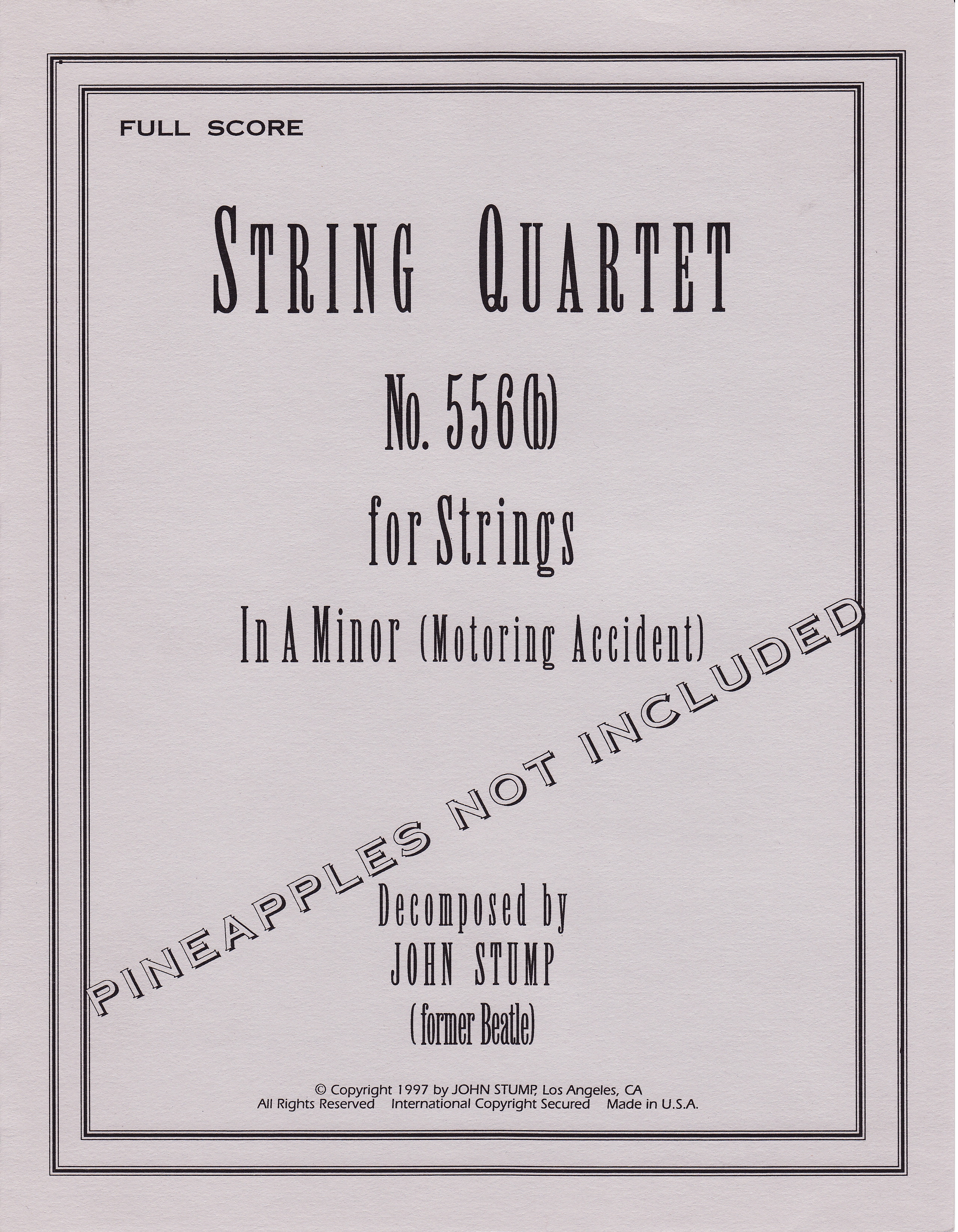
String Quartet No. 556(b) for Strings In A Minor (Motoring Accident) COVER
String Quartet No. 556(b) for Strings In A Minor (Motoring Accident) page 1
String Quartet No. 556(b) for Strings In A Minor (Motoring Accident) page 2
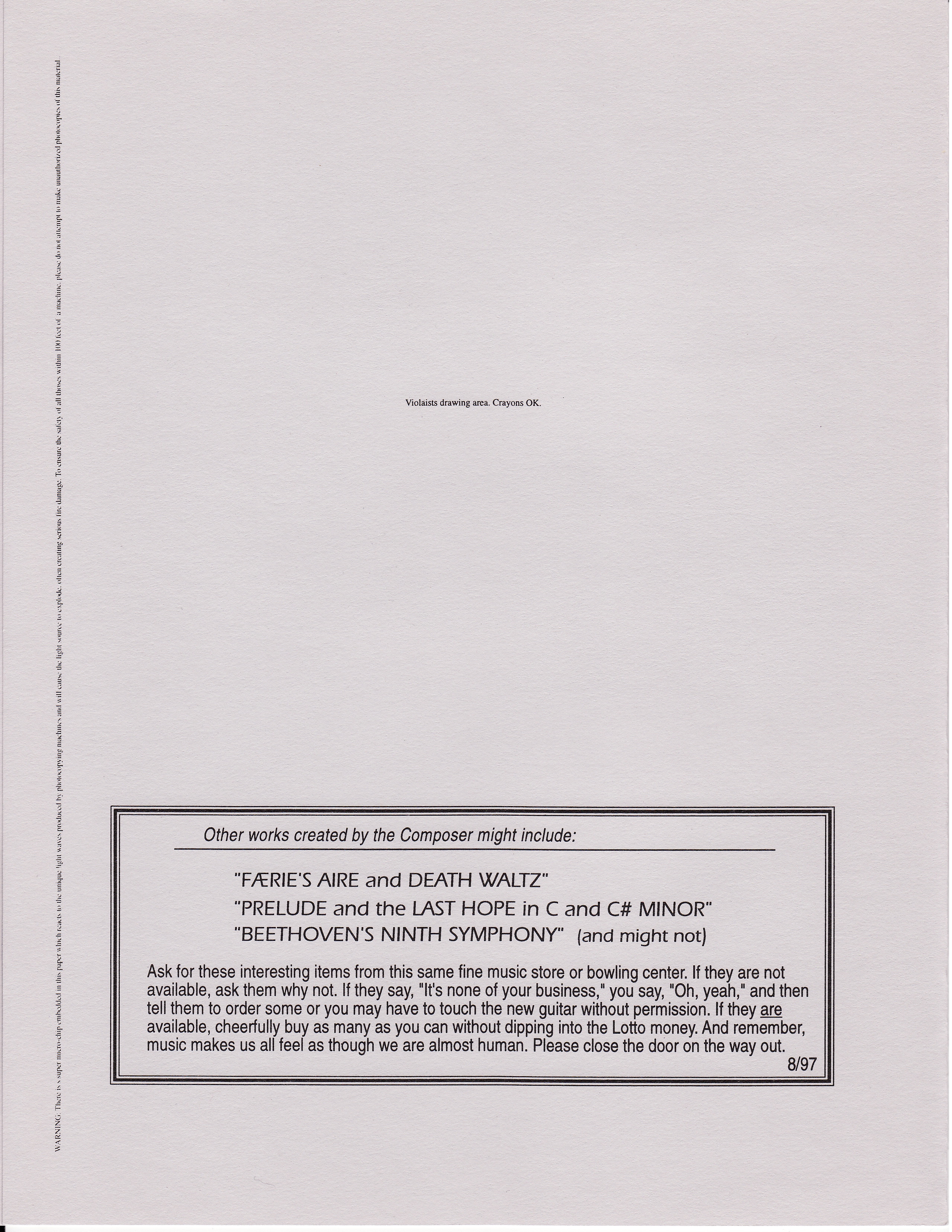
String Quartet No. 556(b) for Strings In A Minor (Motoring Accident) BACK
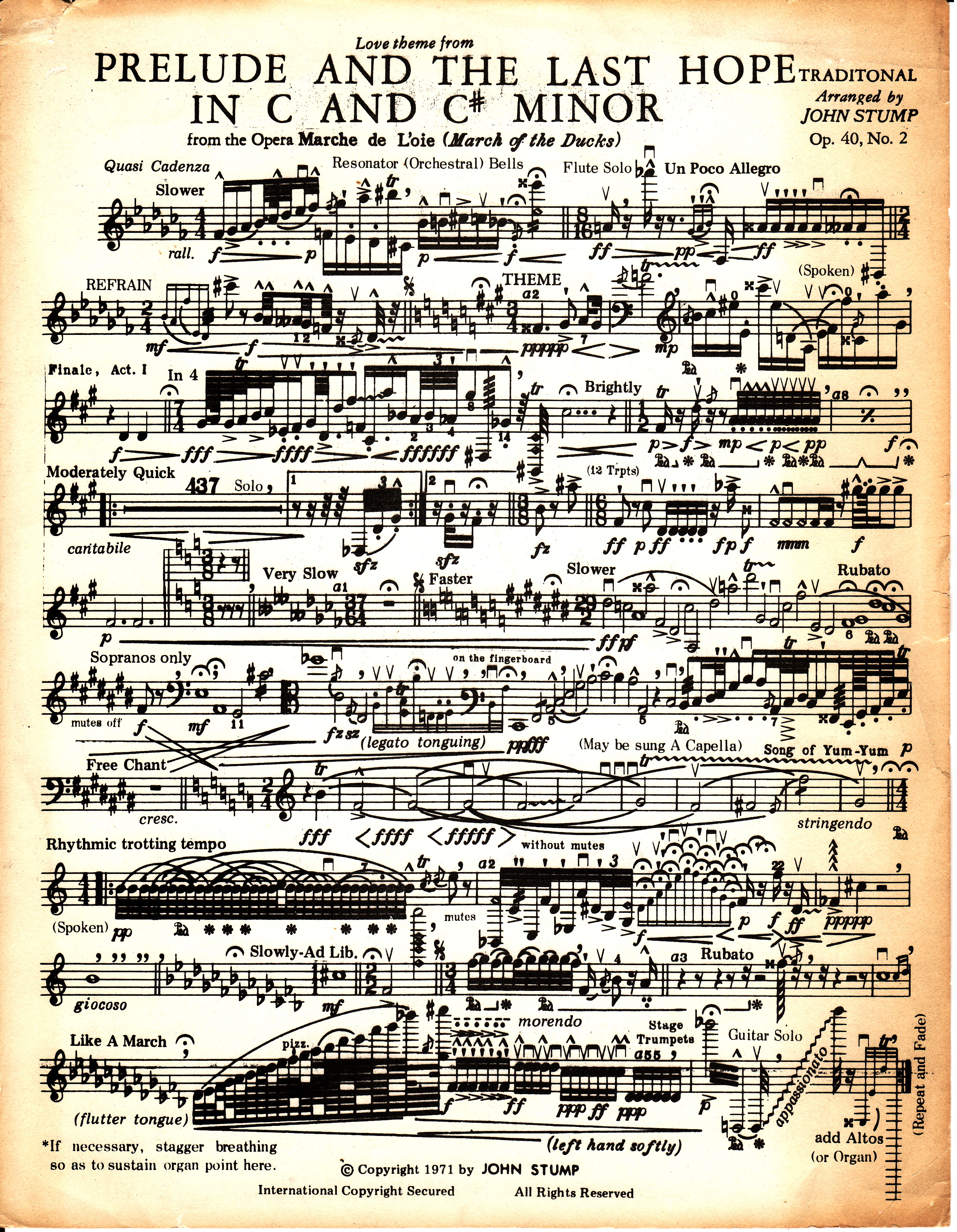
Prelude and the Last Hope in C and C# minor

Eff you, Oscar…here’s The Arts & Faith Top 100

Oscars are on Sunday.  Some good films will be celebrated, some so-so films will get awards–sadly, the best film of the year (Fantastic Mr. Fox) will walk away empty-pawed (though you must check out this terrifically funny animated acceptance speech made by Mr. Anderson).

However, an online group affiliated with the thoughtful religious-y journal IMAGE (who once bastardly REJECTED a story I sent in!) just released their collaboratively determined top 100 films, somehow relating to Arts & Faith (not crystal clear on the criteria…).

One of the crafters of A & F 100, Jeffrey Overstreet, a film critic/novelist whom I had the chance to grab a meal with once upon a time, wrote a bit about the list in anticipation of questions raised by the list–here’s one response I liked quite a bit:

Question #6: Is it just me, or do most of these films look like hard work?

The Arts and Faith Top 100 are not favored for their difficulty. They are honored for their excellence, their beauty, their capacity to inspire us to become more fully human.

Each movie on this list explores fundamental and provocative spiritual questions. Questions that challenge us to grow in understanding. Questions that cultivate community through the experience of bracing conversations. Questions that kindle our deepest longings for all that is sacred and good.

In other words, yes—some of these films require serious work on the part of the viewer. But they are full of rewards for those who give them a chance.

The Arts and Faith Top 100 Films will arrest you with their vividness and strangeness. They are full of beauty and mystery. And unlike what is commonly categorized as “Christian art,” they will leave audiences with some doubt as to their precise application. They tease the mind into thought and reflection—again and again and again.

I agree wholeheartedly with his point & lament it at the same time.  As a culture, we’ve been raised on a steady diet of candy art, making these cinematic banquets taste bitter to our palates.  I’d love to encourage us all to line up a number of these films on the ole Netflix queue, yet at the same time, I feel MY OWN resistance to sitting down to 3+ hours of static camerawork, silence on the soundtrack, and characterizations that feel incredibly ripe for satire (ahh, the pretension!).

Let me then suggest two things:

1.  My own recommendations from this list.  I love the following films enough to own them–I will gladly loan them to you and am also willing to sit down and watch/discuss them together (if you live in a 20 mile radius of La Mirada, CA).

  • #2  The Decalogue (it’s about 10 hours long, in Polish–one short film per commandment, but they are not really interconnected so you can dip your toe in with a few films, maybe I, VI, or X)
  • #3  Babette’s Feast (Danish, Oscar winner, slow but beautiful story of the lavishness of grace)
  • #8 Andrei Rublev (Russian, B/W, slow as hades, but lovely as Abraham’s bosom)
  • #12  Wings of Desire (German, my favorite film of all time!  Just got a new Criterion edition too)
  • #15  Three Colors Trilogy (Polish/French, you should watch all 3 and tell me which you connected with the most)
  • #30  Stalker (Russian, MOLASSES SLOW, but deep as can be, haunting, beautiful)
  • #36 Days of Heaven (American, pretty accessible…amazing cinematography)
  • #51 The Spirit of the Beehive (Spanish, so sweet & profound & memorable)
  • #56  Ponette (French, on my personal top 10, unbelievable performance from a 4 year old)
  • #65  After Life (Japanese film about dead people picking one memory to live in forever)
  • #90  Frisbee: The Life and Death of a Hippie Preacher (I didn’t actually LOVE this documentary–it’s a bit amateur–but the STORY is so worth exploring)
  • #96  The New World (American, I have the extended director’s cut–so powerful!)

2.  Please challenge ME to take on one of these based on your recommendation…I need to keep my tastes from atrophying due to my consumption of the “frivolity-industrial complex” produced films that are playing in my local excuse for a cinema.

With our great affection for lists, perhaps someday we’ll have a “Lost In the Cloud Top 100″…until then, enjoy these selections!

The State I Am In (or, I’m so bored with the C.E.E.)

“And so I gave myself to God; there was a pregnant pause before he said…’Ok.'” — Belle & Sebastian, from ‘The State I Am In’

For a while now, I have been feeling somewhat disconnected from the theological tradition in which I was raised—namely, conservative evangelicalism (or, as I suspiciously call it now, the Conservative Evangelical Establishment).  When I described my religious views on Facebook a while back as “evangelical-esque,” it became even more clear to me that I was uncomfortable aligning myself with a term that most of my community seemed to embrace with no anxiety.

It wasn’t that my conservative evangelical church or my friends were the problem, though occasionally my squeamishness would rear its head in those contexts.  My contention was more with certain types of people who seemed to speak VERY LOUDLY (or at least wear their merchandise) in the public square as representatives of all evangelicals, and even certain leaders within the movement (and I’m not talking about Pat Robertson and the “God Hates Fags” nuts, cause I’m pretty sure they are universally despised).  The types of people I was looking to distance myself from (and I KNOW this is going to be incredibly patronizing, harsh & self-righteous) include, but are not limited to the following:

  • “know-it-all” dogmatic polemicists (usually those who aRE FORMED in a certain theological system—ouch, sorry Calvinist buddies [not because you are this way, but these may include some of your heroes]—but also including a fair share of thinkers of other stripes, who like to think they are God’s gift to orthodox doctrine and love the way the words “heretical” and “heterodox,” if not “compromised Christianity,” roll off the tongue)
  • zealous morality crusaders (whose calling it is to inform non-Christians how they ought to behave as if they were Christians [Yes on Prop. 8 fanatics…and I mean the ones who acted like the world was going to end if it didn’t pass] and to remind loose-living, backsliding “carnal” Christians what a wet blanket, parade-pissing killjoy Jesus wants them to be)
  • Americangelicals (a word I believe I just coined, describing those who believe America is [or should return to being] a Christian nation, flag displayed in the church, patriotic songs sung in a worship service while F-22’s soar behind the projected lyrics, who usually end up acting as useful idiots to the Republican Party—ouch, sorry GOP buddies, of which I have been one my whole life!)
  • sentimentalists (collecting Precious Moments figurine versions of Moses, Jesus, and probably Satan) and other cheesy, tasteless simpletons (unlicensed stickers of Bill Watterson’s Calvin praying on the rear window, NOTW belt buckles, Left Behind novels, Contemporary Christian Music—ouch, sorry 80% of my extended family and acquaintances!)

Obviously these are caricatures of modern conservative evangelicals—however, you’d be surprised at how little scratching at the surface of the seemingly normal Joe Q. Evangelical in the pew next to you it takes to reveal the crazy-eyed & mushy-brained undercover fundy-brother beneath!  (If you doubt me, watch the documentary films Jesus Camp or Hell House, or read the article ‘Jesus Made Me Puke‘ or the book The Unlikely Disciple.  I know some may think I’m a-feared of “the world” thinking that I’m different and ashamed of the gospel, but I’m more scared of my children ever behaving in a manner that anyone with two neurons to rub together can readily see as gross over-simplification and reductionistic pig-headedness!  NOTE:  It has occurred to me that perhaps I am over-simplifying too.)

SO what’s to be done, I ask?  I’m obviously bitter (mainly because these kinds of voices tend to hold the power and the pocketbook in C.E.E. institutions) and disenfranchised to a great extent (this comes as no surprise to those who hear this whole tirade in reply to the question, “How are things going?”).  Where do I go, what do I do?

Do I bail from the C.E.E. and forge into other religious communities (the high church, the paleo-orthodox, the liberal)?  Do I try to work out my issues within the C.E.E. system while experiencing this incredible and often unbearable theological and intellectual, not to mention aesthetic, cultural and moral tension (the whole, “the church is a whore, the church is my mother” high-wire act)?  Do I go into exile from my community for a period and either come back head-in-hands repentant or fire-breathing prophetic?

I’m not sure as of yet.  And I ask all of these questions rhetorically and with only a mild sense of the exasperation that my critical, angry-young-man posture must produce in those who have sat and listened, responded patiently and gently so many, many times in these past years and even read this now.

In the midst of all of my frustration with the evangelical label, I am so grateful for the thoughtful brothers I have who will hear me bark and scowl and rage and who will even then pray for me, even in the midst of their own frustration WITH me, and whom I believe God will use to help me sort this out…my dear Matthew, Ryan, Dan, David, and Wade.  I definitely need to spend some time with Les & Steve in the near future, and am so grateful for my flesh & blood brother Mark, who is sometimes a comrade-in-arms, sometimes a sparring partner.  Finally, I am thankful for the inspiration of my dearly loved Elijah, who is so much younger & so much wiser than I am, sadly thousands of miles away.  I love you all and ask you, along with any dear reader to come across these longing and hurting words, to hope for me in figuring out where I am, where I am headed, and where I am wrong-headed…in the state I am in.