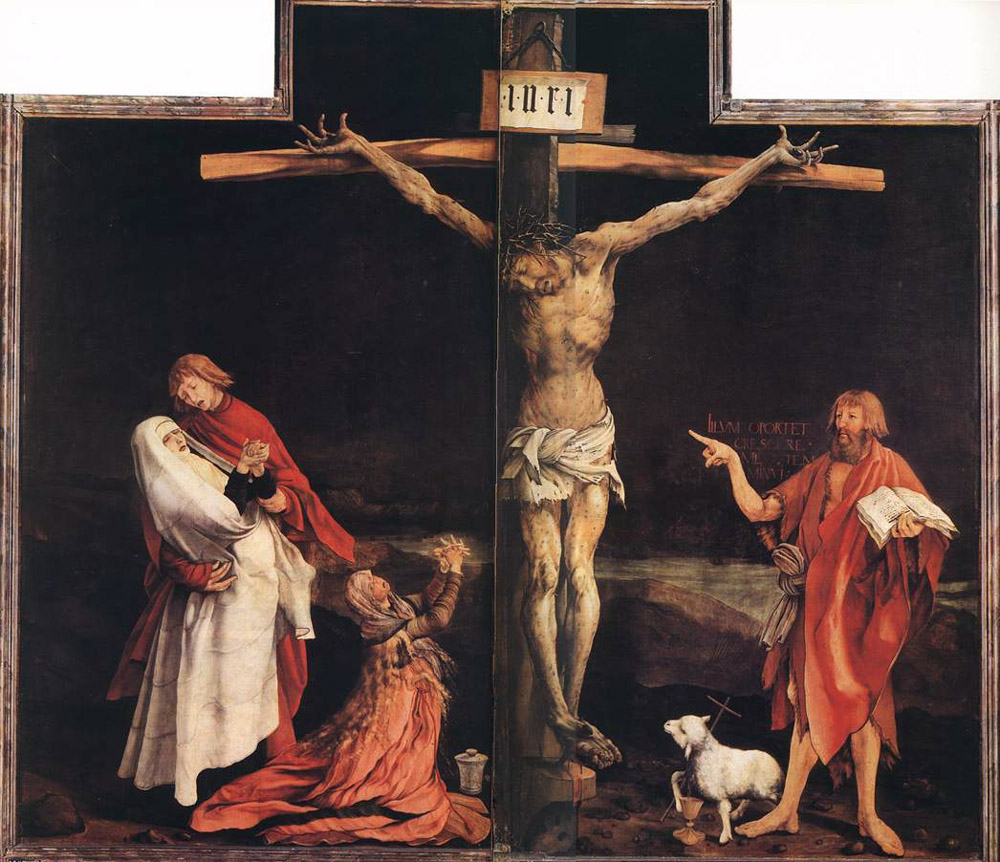
This is a narrative reflection I wrote for a class on Genesis, where the assignment was to choose a character from the book of Genesis and outline their thoughts on a particular occasion. I chose the serpent preparing to tempt the woman in the garden, Eden (Genesis 3:1). [Note: the use of plural pronouns with singular verbs in what follows is an attempt to convey the serpent/Satan’s awareness of the trinitarian reality of God.]
from Gustave Dore's illustrations for Paradise Lost
“The eternal One knows I am here in Their garden, but as yet They has done nothing to acknowledge my presence. I know that I am neither welcome nor forbidden in this fecund new world, but I had expected my visit to, at the least, elicit some Divine comment. I did feel the backside of the Breath, at once both cold as the empty heavens and hot as the greater light, move past me when I was hiding in the goat, eavesdropping on Their final act of making: the pathetic dirtlings. Hah! Made in the image of Their holy perfection? No host will ever ring out in anthem in praise of those lumpy bipeds…I guarantee it, not one single gloria.
But when They knelt next to the inert form of the man, I shuddered with horror at the tenderness with which Their hand cupped the thing’s head and pushed its hair back from its brow—at that moment, I began to stomp and whinny with such disgust that the she-goat at my side snuffed, bared her teeth at me, and wandered off—and then, as I looked back again, They leaned in toward the earth creature, so close as to kiss its face. And They held Themself there, breathing softly over it for a time. I had to turn away from the choking revulsion and burning in my eyes, as if a thorn had just scratched my face. I made to leave the goat, but glanced over, just for an instant, only to see the man staring into Their face. As much as I hate this creature, and the next one who came out of him, and though I mean to destroy them both, I will acknowledge that there was a glimpse of something like the purity and beauty I remember from the court reflected in its eyes as it gazed into the love of the eternal One. I could stand the recognition no longer and fled the bewildered and agitated goat.
Now I wait for the woman, in a serpent, near the edge of the gentle river where she wades and dips under the water. I’ve taken notice that she likes the serpent, as it is slender and smooth in her soft hands and as the man once tickled her tender heel with its flickering tongue. She feels no intimidation with its size and therefore will sense no coercion when I speak to her about the prohibited tree, one of only two ancient things in this nascent land. She goes to the center of the garden sometimes to gaze at the tree, with mostly a happy curiosity and yet also a little fear, as she never comes close enough to really look at it with more than a squint. I mean to escort her right up to its limbs, close enough for her to see a different reflection in the luster of its fruit—her own beautiful face. I can see her, already, pulling the branch down and yanking off the fruit, sinking her teeth deep into its flesh, juice and seeds dripping down her neck. Will she feel as I did: a surge of power and then terror?
But how to get her from here to there…
She shakes her head, like the beasts, to send the water back to its source, which indicates she means to walk to the shore. And I now I need to find the words to get her to go with me to the tree. If I command her, she will simply laugh at me and stick out her tongue, saying, “Who are you, serpent, to command me, your queen and keeper?” If I say I wish to walk alongside her, hoping to subtly lead the way to the center, she will likely want to find the man to accompany us—she is drawn to his presence like rain to the earth—and he lacks any desire to go that way, as he avoids the tree altogether (the prohibition was among the first things They said to him, after all, and he heard it directly from the Voice, unlike the woman). I could deceive her and tell her the eternal One asked me to bring her to the tree, but then if They was not there, she would call out for Them and all would be for nothing.
But perhaps, and here she comes, perhaps if I asked her a question, “Did God really say, ‘You must not eat from any tree in the garden’?” she will want to take me to the place and correct my ignorance by pointing to the one forbidden thing, telling me this alone is the tree. And then, when we are close enough, I will tell her what I know, what I have tasted.
And she will want to know as well.
She will want to taste as well.
She stands now before me, unaware of her naked flesh for the last time.
The issue of ‘homosexuality’ is probably one of the more heated social issues facing the contemporary Church. Among different denominations (and even within single denominations) the issue divides on a scale from peaceful disagreement to violent hatred. Perhaps the most visible and widely despised of these positions is illustrated by the antics of the Topeka, Kansas-based Westboro Baptist Church and their signature slogan: ‘God Hates Fags’.
Needless to say, this is a MASSIVE conversation in the Church and society at-large. Unfortunately the debate within the Church—the topic of this post—frequently results in an ever-divergent hatred for the opposition. One view (we’ll call it ‘Perspective I’ to avoid confusing, overused and unhelpful ‘conservative’ vs. ‘liberal’ labels) essentially believes that the Church and the Scripture attest to the opposition of LGBT+ people in the kingdom of God. In this view God has designed sexual relationships to take place in a particular way – in other words, heterosexually. This is often supported with social and psychological analyses of homosexuality in Western culture. The ‘slippery slope’ is often appealed to here, concerning the possibility in a culture that grows more accepting of ‘public homosexuality’. An example of how this view sees homosexuality adversely affecting the Church follows: same-sex marriage is made fully legal, churches will lose tax-exempt benefits for teaching portions of Scripture that seem to attest to the prohibition of homosexuality in the kingdom of God and ultimately conservative priests will be prosecuted and imprisoned for merely teaching what the Church has generally held to for nearly two-thousand years.
Another view (which we’ll call ‘Perspective II’) essentially believes that the Church is mistaken and that the Scripture is not explicitly clear regarding sexuality, often appealing to socio-historical evidence for the manner in which homosexuality was practised in the Scripture’s first-century-Roman context. In this view homosexuality is not generally considered a choice, but a specific sexual orientation that defines a significant part of what makes an individual an individual.
There are numerous positions around and about these two views (including two views based upon the assumption that homosexuality is natural – one view holding that LGBT+ people are called to celibacy in the kingdom of God while the other holds that homosexuality is natural and should be openly embraced in the kingdom of God) and it is would be impossible to explore them all, but I believe we’ve got a moderate sample of the two major ‘sides’ of this argument within the Church in Perspectives I and II.
One interesting thing I feel the need to point out is the general historical oppression of non-heteronormative people in Western society. Even today, with the elimination of laws prohibiting homosexual practise in Western countries (though these are still quite present in many nations today), massive stigmas and stereotypes are used to oppress LGBT+ people. In my experience I have heard many-a-Christian rants on how homosexuality has ‘infiltrated our culture’ and is being used to ‘pervert our youth’. That’s a very loaded assessment. I am generally sceptical of such sweeping statements regarding a group of people who by and large don’t even have the legal right to marry in the vast majority of American states. Homophobia is rampant and this (like other forms of xenophobia) oftentimes leads to very aggressive mistreatment of LGBT+ people. Even the recent claim by Cardinal Bertone that homosexuality was to blame for the Catholic abuse scandals ignored the fact that many of the abused were in fact females (and also that the large number of males abused might be a result of the general pairing of girls with nuns and boys with priests in schools) in exchange for trying to oppressively pin the failure of the Church on a whole people group.
My honest opinion is quite open in general, although my tendency is to lean toward Perspective II. Whilst I hold Church tradition in high esteem, the Church has certainly been wrong in the past with numerous issues and our trusty Nicene Creed makes no mention whatsoever concerning the nature of sexual relationships in the kingdom of God. For now I merely want to pose two brief lines of questioning to the two main camps on either side of the issue of homosexuality. These questions are not meant to pull the rug out from either side, but to promote a more compassionate and gracious way of thinking about the debate. I do not necessarily agree with each one of these questions on either side, but they seem to be valuable things to address.
Perspective I
Is it possible that in the Church, homosexuality, if considered a sin, is often treated very differently than other issues that are considered sins (even other sexual sins) in an unfair manner?
In Mere Christianity, Lewis argues that the nature of particular sins can make them more or less cancerous within the Church. For instance, pride involves sinfully elevating oneself above another. Is it possible that an egotistical zealot might be more divisive and harmful to the community of a local church than a homosexual couple in a committed relationship?
Can the few passages in Scripture that are often associated with anti-homosexual views be interpreted in any other manner? What are we to make of the lack of teaching regarding homosexual relationships in the teaching of Christ found in the Gospels? Let me stress that I do not believe that these issues alone make or break Perspective I (the general tradition of the Church might be able to provide some added strength to this view), but I do believe that these possibilities might serve to soften the tone of Perspective I.
Perspective II
Is it possible that many of the people who espouse ‘Perspective I’ are not hatemongers, but Christians who genuinely care about the well being of LGBT+ people, even if misguided?
I have many thoughts on these issues, but I’ll cease my questions and open up the discussion. What I hope and pray for in this conversation is mutual respect and beyond everything else, love and compassion. Profound love is what ought to characterise the words, thoughts and actions of a member of the kingdom of God who has been profoundly confronted by the immense grace and love of God as demonstrated in the life, death and Resurrection of Christ and the advent of his holy and inviting Church.
There are many good thoughts and perspectives on either side of this debate. Please share your input, but take care to use gracious language and to neither demonise nor dehumanise the opposing perspective or your comment may be deleted. I am not demanding that everyone shares my views or that no one holds firmly to his/her own view—I encourage you to share your convictions with a loving and gracious passion.
We believe in one God, the Father All Governing, creator of heaven and earth, of all things visible and invisible;
And in one Lord Jesus Christ, the only-begotten Son of God, begotten from the Father before all time, Light from Light, true God from true God, begotten not created, of the same essence as the Father, through Whom all things came into being, Who for us [humans] and because of our salvation came down from heaven, and was incarnate by the Holy Spirit and the Virgin Mary and became human. He was crucified for us under Pontius Pilate, and suffered and was buried, and rose on the third day, according to the Scriptures, and ascended to heaven, and sits on the right hand of the Father, and will come again with glory to judge the living and dead. His Kingdom shall have no end.
And in the Holy Spirit, the Lord and life-giver, Who proceeds from the Father, Who is worshiped and glorified together with the Father and Son, Who spoke through the prophets; and in one, holy, catholic and apostolic Church. We confess on baptism for the remission of sins. We look forward to the resurrection of the dead and the life of the world to come. Amen.
(Creed taken from John H. Leith (ed.), Creeds of the Churches [Louisville: Westminster John Knox Press, 1982], 33.)
Dear reader, as much as I am loathe to pay attention to anything having to do with politics, economics, etc. (i.e. anything that has practical/real implications for life), the media won’t let me ignore this whole “Tea Party” movement, which to this point I have associated with [shudder] Sarah Palin-ites, grumpy old white people, and ignorant loudmouths.
Social suicide is not an American value
But now it’s come to my attention that a Republican primary candidate for California’s 30th State Senate District (which includes La Mirada, where I live) named Warren Willis has attached himself to the Tea Party movement. This would not make a lot of difference to me if I didn’t know that Willis was running an organization (the California School Project–CSP) which promotes and empowers on-campus Christian evangelism by students. I know a number of very thoughtful and intelligent people who work for CSP and who think highly of Willis, so I am left to wonder about his association with this group.
I have run across a few articles of late which have reinforced my predisposition to see the flaws of this movement. I’d be happy to encounter other perspectives if you can send them my way…
Some quotes from the articles I mentioned:
The movement is not yet united on a single platform or agenda…The lack of specifics allows anyone who is just existentially fed up (and who isn’t, on some days?) to feel right at home. No one will demand to know what he or she is fed up with…
The Tea Party movement has been compared (by David Brooks of The New York Times, among others) to the student protest movement of the 1960s. Even though one came from the left and the other from the right, both are/were, or at least styled themselves as, a mass challenge to an oppressive establishment. That’s a similarity, to be sure. But the differences seem more illuminating.
First, the 1960s (shorthand for all of the political and social developments we associate with that period) were by, for, and about young people. The Tea Party movement is by, for, and about middle-aged and old people (undoubtedly including more than a few who were part of the earlier movement too). If young people discover a cause and become a bit overwrought or monomaniacal, that’s easily forgiven as part of the charm of youth. When adults of middle age and older throw tantrums and hold their breath until they turn blue, it’s less charming…
Some people think that what unites the Tea Party Patriots is simple racism. I doubt that. But the Tea Party movement is not the solution to what ails America. It is an illustration of what ails America. Not because it is right-wing or because it is sometimes susceptible to crazed conspiracy theories, and not because of racism, but because of the movement’s self-indulgent premise that none of our challenges and difficulties are our own fault.
“I like what they’re saying. It’s common sense,” a random man-in-the-crowd told a Los Angeles Times reporter at a big Tea Party rally. Then he added, “They’ve got to focus on issues like keeping jobs here and lowering the cost of prescription drugs.” These, of course, are projects that can be conducted only by Big Government. If the Tea Party Patriots ever developed a coherent platform or agenda, they would lose half their supporters.
Principled libertarianism is an interesting and even tempting idea. If we wanted to, we could radically reduce the scope of government—defend the country, give poor people enough money to live decently, and leave it at that. But this isn’t the TPP vision. The TPP vision is that you can keep your Medicare benefits and balance the budget by ending congressional earmarks, and perhaps the National Endowment for the Arts. (quotes above from an essay in The Atlantic magazine)
Jim Wallis points out 5 contentions between Christianity and the Tea Party/Libertarian movement in a recent Sojourners online post:
The Libertarian enshrinement of individual choice is not the pre-eminent Christian virtue.
An anti-government ideology just isn’t biblical.
The Libertarians’ supreme confidence in the market is not consistent with a biblical view of human nature and sin.
The Libertarian preference for the strong over the weak is decidedly un-Christian.
There is something wrong with a political movement like the Tea Party which is almost all white.
Sorry to delay the next installment of this series so long (also see part I and part II), but I’ve been busy wrapping up the end of my seven years on staff at Biola University, so now I can TOTALLY come out of the closet as a raging liberal (kidding…kind of?). On the note of “liberals*,” namely those people of whom many at conservative institutions like Biola would say are not actually Christian (perhaps a little residual “phantom limb” reflex from the amputated Bible-thumping arm of our fundamentalist heritage), Olson explores in the next section the idea of what truly constitutes “authentic Christianity.”
Postconservative evangelicals (PCE) “believe that conservative evangelicals (CE) tend to place too much emphasis and value on facts” and that “authentic Christianity is too often equated with correct grasp of information” and the “propositional nature of revelation and the cognitive aspects of Christian discipleship.” Olson is quick to point out that PCE thinkers AGREE that there is an important cognitive and propositional content to our faith–it is simply that many CE thinkers have overemphasized and indeed become obsessed with this dimension as THE essence of true Christianity.
My boy MILLARD's classic one-volume systematic...
He cites examples of this from the works of two CE theologians, Millard Erickson & D.A. Carson, whom Olson expresses admiration for even while disagreeing with their elevation of “cognitive knowledge and affirmation of correct doctrines as the hallmarks of authentic evangelical faith.” Olson points out that the CE view tends to “highlight the didactic side of Scripture and interpret revelation as primarily communication of information about God.”
Olson quickly points out the common ground between CE & PCE thought: “both believe that there is a gospel supernaturally communicated to human beings by special divine revelation and that apart from this gospel people cannot know God as they should.” The difference lies, he says, in whether the transcendent source of of authority for believing and living, as well as the Christian identity it creates and preserves, is primarily a content of information or a means of transformation. (He concludes that it is indeed BOTH, but that the CE view is out of balance in it’s overemphasis on the informational component.)
Olson continues by digging at the dual roots of contemporary evangelicalism: Puritan Reformed theology, with its emphasis on confessional preservation of orthodox belief & the Pietistic/Revivalist emphasis on the experience of God’s transforming power. He describes how a growing awareness of this duality led to the two groups beginning to “snipe at each other and take potshots at each other in print” (pointing specifically to Carson’s The Gagging of God & David F. Wells No Place for Truth).
Olson begins to defend the PCE view, and in particular his friend, the late Stanley Grenz, from the attacks and suspicions of CE thinkers, specifically refuting any “shallow interpretations” that would try to link the PCE movement to liberal theology and the ideas of the first liberal theologian, Friedrich Schliermacher, who emphasized feeling and experience over reason and ideation. Indeed Olson says PCE’s have “no interest in being liberal” but rather desire to free evangelical theology “from captivity to the Enlightenment culture’s rationalism and obsession with ‘facts’ to the exclusion of truth in experience and personal knowledge.”
While acknowledging the role of information in the Christian life, PCE’s “do not believe that facts constitute the essence of authentic Christianity or true evangelicalism, both of which are primarily expressions of the transforming power of a relationship–the relationship between God in Jesus Christ manifested through the Holy Spirit and the person in community.” In this perspective, doctrine is the “second-order language of the church that brings to expression this [supernatural] transforming experience.” Doctrine serves experience, and not vice versa.
A quote from Alister McGrath points in this direction (though McGrath does not go as far as identifying experience as the essence of evangelical faith):
It is a travesty of the biblical idea of ‘truth’ to equate it with the Enlightenment notion of conceptual or propositional correspondence, or the derived view of evangelicalism as the proclamation of the propositional correctness of Christian doctrine (from A Passion for Truth: The Intellectual Coherence of Evangelicalism).
More explicitly, Stanley Grenz pointed toward the concept of “convertive piety,” which is “a certain experience of God that is supernatural, personally transforming, and centered around the cross of Jesus Christ and the indwelling of the holy spirit.” Olson goes on to point out, and this is what makes some squirm, that “a person who has this experience may be a real Christian–and an evangelical–without yet being orthodox doctrinally.” While “doctrinal systems have their value,” it is “a distinctive spirituality that forms evangelical Christianity’s essence.” Grenz succinctly stated in his groundbreaking 1993 work, Revisioning Evangelical Theology, that “the truth of the Christian faith must be personally experienced truth.”
Grenz points out that while “doctrinal systems and worldviews inevitably arise within communities and shape individual identity and group knowledge…[they] cannot replace or stand in for spiritual experience [but are] expressions of it.” In Grenz’s view, “the ultimate authority for developing Christian belief and life is the Spirit speaking through the Scriptures in the context of the community shaped by a common spiritual experience of convertive piety.”
So what about doctrinal correctness? Olson replies that while it is important, correct doctrine does not trump the experience of a converted believer. “Apart from the transforming experience, authentic evangelicalism does not exist even where doctrinal correctness is present. And where right experience and right spirituality are present in Jesus-centered living, authentic Christianity may be present even if doctrinal correctness is not yet fully present-provided that movement in the right direction is clearly discernible.”
The difference between CE and PCE thinking on this point may be hard to detect…Olson lays out a few areas of competing emphasis:
CE proponents “assert that the basis of our Christian beliefs must not be experiential because experience is subjective.” For them, “the basis of our [faith] must be reason grasping divine revelation [and that] the system of beliefs drawn from [divine revelation] is rationally superior to all competing systems of belief.”
PCE thinkers (and allies such as McGrath) fear that CE theology is “turning evangelical faith into a philosophy and the Bible into a book of facts to be organized into a coherent system.” (I’ve seen this mentality at work many times in my experience with the CEE.) PCE thinkers hold narrative up as an alternative to CE overemphasis on the propositional. “Narrative is meant to transform and does transform; it creates identity in a way factual statements do not…The point of this announcement in story form is to transform people; it is a story about salvation and brings about salvation.” The cognitive dimension is not dismissed, but is rather relegated to secondary status.
This does allow for more uncertainty and ambiguity as to who is “in or out” of evangelicalism and makes heresy hunting a bit more difficult, but PCE’s are comfortable with this tension without becoming “relativists.” Rather, Olson says they are “critical realists”: “Absolute truth is what God knows; our grasp of truth is always from a certain finite perspective and infected with finitude and falleness.”
This emphasis on intellectual humility is one of the aspects of the PCE that appeals so much to me and I find myself willing to live with greater tension and ambiguity as I look at other people who claim to follow Christ. Do you find, however, that too much is lost in making an experience of “convertive piety” the essence of Christianity rather than assent to a set of doctrinal propositions? I’d love to hear your thoughts…
*[update: I just finished two classes where we explored in a bit more depth the history, methodology, & theology of classical Christian liberalism and its modern descendants…goodness & mercy, I am no liberal!]
I believe that Greg and I were exercising a subconscious experiment to see if we could go the entire month of May without a post, but I am pleased to continue the Imaging the Kingdom series.
The terms ‘orthodoxy’ and ‘orthopraxy’ are tossed around a lot in contemporary Christian circles. Among Protestants, two groups seem to gravitate toward one or the other: Emergents (Post-modern Christians) toward orthopraxy (emphasising the practise of religion) and Evangelicals toward orthodoxy (emphasising the belief of religion). It might seem obvious to you, my beloved readers, that any branch of Christianity that is given over to one of these two positions exclusively is incredibly weak. Perhaps you’re not so convinced that both are absolutely essential to members of the kingdom of God (which they are) or you want to explore how the two relate to one another in the kingdom of God (like me). This is a long conversation that goes back through the centuries. It seems that within the Church people are often reacting to one side, then to the other. This is especially evident since the Protestant Reformation, which I will expound [crudely for the sake of brevity].
In his Ninety-Five Theses (written in 1517 – the document that sparked the Protestant and Catholic Reformations, essentially) Luther argues against clerical abuses and states explicitly that both outward and inward repentance is important. Luther believed—and I would say believed rightly—that the Church was abusing authority primarily with regard to specific gifts to the Church (indulgences) that were being used to fund the building of the papal palace. In return for these gifts, people were given pardons from certain amounts of time in Purgatory (as is the purpose of indulgences in the Catholic tradition). In his Theses Luther also argues against the demotion of the Scripture in Church worship for the sake of things like said pardons. At the time, it was not Luther’s intention to break away from the Roman Church, but to reform it. Still, Luther’s refusal to back down from his increasingly hostile criticisms against the Catholic Church brought about his excommunication in 1521.
Perhaps the most enduring aspect of Luther’s teachings in the Protestant world involves his principles of sola fide (‘by faith alone’), sola gratia (‘by grace alone’) and sola scriptura (‘by Scripture alone’). Luther was convinced that the Church had drifted from the Pauline teaching of salvation by faith in Christ alone, instead opting for additional works in order to ‘acquire salvation’. The Council of Trent (1545) made clear the belief in the Catholic Church that it was exclusively by God’s grace that salvation came to the believer, but by this time the teaching of Luther and the reformers that followed after him had done its damage. One of the central tenets of the ‘Lutheran view’ is that the epistles of St Paul dealt with the issue of the Jewish understanding of ‘salvation by works’ (a controversial notion that I believe is an inaccurate read of both Second Temple Judaism [6th century BCE to the 1st century CE] and the writings of Paul). When Luther looked at Paul’s writings he saw his situation (a Christian dealing with the false teachings of an established religion based upon salvation by works) coupled with Paul’s dealings with the ‘Judaisers’. As a result of this interpretation, the Lutheran and Reformed traditions have always possessed what some might consider to be a disproportionate aversion toward the concept of ‘works’. Luther’s view has been criticised by those that hold a more traditional view and the recent work by Protestants like Krister Stendahl, E. P. Sanders, James Dunn and Tom Wright (the ‘New Perspective on Paul’), which in itself is a 20th century reaction to the Protestant Reformation.
As the Protestant Reformation made its way across Europe, it opened the door for the replacement of the feudal social system with a more mercantile (eventually capitalistic) social system. The Enlightenment came to pass, which generally pressed that the right beliefs (essentially by way of right logic) precede right actions. In the late 18th and early 19th centuries The Romantic and Counter-Enlightenment movements reacted against the Enlightenment, stressing the inadequacy of bare logic and doctrine. Friedrich Schleiermacher played an important role in the intellectual history of Europe at this time. He held that experience was to inform doctrine. Theological liberalism followed Schleiermacher and dominated Western Christianity for the next century.
In the early 20th century we see the birth of Modernism and WWI. Karl Barth, reacting against the endorsement of the Weimar Republic’s expansionistic ambitions by his liberal theological mentors, rejected the conclusions of Schleiermacher. Barth, inspired by Hegel and Kierkegaard, instead proposes a dialectic approach in which the unknowable God has revealed Godself in Jesus Christ and it is through Christ alone, the Word of God, that a Christian might experience God. Modernism pressed forward after the First World War, critiquing orthodoxy, which prompted the Fundamentalist Evangelical reaction. This movement made way for the surge in popularity of the Restorationist Movement (emphasising ‘proper’ action) and the anti-intellectual Jesus Movement (emphasising ‘correct’—though not necessarily orthodox—beliefs).
Post-modernism has found expression in the Emergent Movement, which emphasises ‘belonging before belief’, prompting yet another Evangelical reaction emphasising ‘belief before belonging’. In reaction to this whole mess we also have those who try to hold onto something universal and unchanging – ‘Ecumenists’, like me.
In looking very briefly at some Western intellectual history over the last 500 years I hope to have not offended too many readers. If you feel my incredibly brief summary has not treated your views equally I apologise profusely and ask that you would please comment if you’d like to add something relevant – I might have more detailed reasons for much of what I did write and we can engage in an enlightening (excuse my language) dialogue.
So where are we now? We’ve determined that [Protestant] Christians have shifted frequently between emphases on orthodoxy and orthopraxy. We’ve also determined that two prominent Protestant movements are currently in conflict over this very issue. What does the Gospel of the kingdom of God have to say about these two things?
We can look to Scripture for some insight, but I quickly want to express a few things with regard to Scripture. I believe that it is essential to acknowledge that Scripture was written by different people at particular points in time, in particular geographical locations, for particular reasons. This is not to say that the Scripture has become entirely inaccessible to anyone in our present age. I believe that God has given the Church authority and therefore as a product of the Church, the Bible has authority. God is also a living and active God and the Holy Spirit of God can provide guidance and insight in our explorations, potentially. Still, the Scripture is not a treatise on everything – that is not its purpose. I believe a sure way to orient ourselves in order to see the world (and this issue of orthodoxy vs. orthopraxy) in light of the kingdom of God we must look toward our example of proper living in the kingdom of God: Jesus of Nazareth.
With regard to the life of Christ, the primary focus of Christian tradition and the Scripture is the three-year period leading up to his death and Resurrection. This is considered Christ’s public ministry. When we look at Christ’s ministry, what is it characterised by? Do we see an exclusive emphasis on orthodoxy? What about orthopraxy? It is quite clear that Christ valued both things and didn’t paint one especially important over the other. Instead it is more of a process.
Some might say that works are necessary for a member of the kingdom of God. I would say that works are inevitable for a member of the kingdom of God. We do not enter the kingdom by our works, neither do our good works merely demonstrate that we are part of the kingdom.
I actually propose that our good works are a reaction in themselves, a reaction to the grace of God through the Gospel. Some might say, sceptically, “Oh great, the obscure ‘Gospel’ card again,” as if it is some inexplicable and abstract notion. Others might argue that this emphasis on the Gospel seems to imply a preeminence of belief over works. It is true that the Gospel is composed of data in part – historical facts regarding the actions of God, culminating in the death and Resurrection of Christ and the advent of the Church. But instead of viewing the Gospel as brute facts, I would rather see it as something we perceive with our whole being. We do not merely hear its words and think, ‘I believe that.’ The Gospel is the effective power of God through the Holy Spirit and the invitation to participate in the redemptive mission of the creator of the universe as members of God’s family, the Church. Therefore I would see this reaction to the Gospel not as a reaction to bare facts or experience, but the entirety of what it is to begin to comprehend the grace of God for the creation.
The God of history has entered into history and has redeemed all things, visible and invisible, and in this we cannot see a serious Christian faith without a balance of orthodoxy and orthopraxy. In other words, Christianity is not merely about doing the right thing or believing the right thing. Perhaps Christianity is more about doing the right thing based upon the right motives. It is an active faith, that does not exclusively demand our beliefs, nor does it exclusively demand our actions – it demands all that we are, visible and invisible.
We believe in one God, the Father All Governing, creator of heaven and earth, of all things visible and invisible;
And in one Lord Jesus Christ, the only-begotten Son of God, begotten from the Father before all time, Light from Light, true God from true God, begotten not created, of the same essence as the Father, through Whom all things came into being, Who for us [humans] and because of our salvation came down from heaven, and was incarnate by the Holy Spirit and the Virgin Mary and became human. He was crucified for us under Pontius Pilate, and suffered and was buried, and rose on the third day, according to the Scriptures, and ascended to heaven, and sits on the right hand of the Father, and will come again with glory to judge the living and dead. His Kingdom shall have no end.
And in the Holy Spirit, the Lord and life-giver, Who proceeds from the Father, Who is worshiped and glorified together with the Father and Son, Who spoke through the prophets; and in one, holy, catholic and apostolic Church. We confess on baptism for the remission of sins. We look forward to the resurrection of the dead and the life of the world to come. Amen.
(Creed taken from John H. Leith (ed.), Creeds of the Churches [Louisville: Westminster John Knox Press, 1982], 33.)
Since I converted to Christianity in my teens I have been continually exploring what it means to be a Christian. In my experience I have become increasingly convinced that Christianity hinges upon one major theme: the kingdom of God. It is used throughout the Christian tradition and is referred to throughout the Scriptures many times (oftentimes referred to as ‘the kingdom of heaven’). The phrase can be picked apart from many sides, but I believe that its general implications are as follows:
God is the king of the kingdom
The kingdom of God is both visible and invisible
To be a Christian is to be a citizen or member of the kingdom of God
In the Christian tradition, these implications, while very basic, are indispensible. This series, Imaging the Kingdom, is intended to explore the nature of the kingdom of God and its implications in the universe, and therefore in our world and in the lives of all Christians. It must be noted that this exploration is inevitably non-exhaustive – we will explore why later. First we will briefly analyse these three implications.
1. God is the king of the kingdom
The kingdom of God is the most important theme in the Christian tradition (and arguably the other two Abrahamic religions: Judaism and Islam). The natural head of any ‘kingdom’ is the ‘king’. To say that God is the king of the kingdom of God is to say that God is the ruler of the kingdom, a rightful monarch without equal. All authority and power in the kingdom of God belongs to God.
2. The kingdom of God is both visible and invisible
In my experience I have noticed that oftentimes conversations about the kingdom of God (if the kingdom of God is spoken of at all) revolve around the ‘already but not yet’ nature of the kingdom of God. There are real issues affecting how we experience the presence of the kingdom of God in this age, the Church age. The orthodox Christian understanding is that throughout history God has been extending his reign over a fallen universe that has rejected his reign. This extension has taken its most dramatic leap forward in the life, death and Resurrection of Jesus Christ. Since (and through) that event, God has established his Church on earth, empowered by the Holy Spirit to live out what it means to be in the kingdom of God, which we will talk more about later. There is an element (or are elements) of the kingdom of God that is not yet present, something made especially evident in the Christian experience. The expectation of Christians throughout history is that God will bring about the fullness of the kingdom of God at some future point in the second coming of Jesus Christ. This is what is meant in the ‘but not yet’, and while the discussion of what is ‘not yet’ is necessary, the primary focus of this study will be that which is ‘already’. I use the language ‘visible and invisible’ as it is written in the Nicene-Constantinopolitan Creed of 381 CE, which I consider the most fundamental and comprehensive ecumenical (general) Church creed:
We believe in one God, the Father All Governing, creator of heaven and earth, of all things visible and invisible…
Even in this first section of the Creed we see our first two implications (1. God is the king of the kingdom; 2. The kingdom of God is both visible and invisible). The language of the Creed is helpful because it seeks to paint a very clear and concise picture of the orthodox Christian faith. The words ‘visible and invisible’ help us to see the overarching nature of the universe and God’s reign of that universe. Orthodox Christian theology does not paint the universe in a dichotomy of ‘physical’ and ‘spiritual’. Throughout the ages, this dualism has caused countless conflicts that have been deemed heretical. Indeed, to see humans or the universe as split into ‘physical’ and ‘spiritual’ conflicts with the way that God has both created the world and redeemed it – holistically. God is not interested in creating a physical world just to destroy it. The Incarnation and the life, death and Resurrection of Christ point to a God who created unified, holistic beings, whose nature is fully understood in unified, holistic terms. As St Paul writes in 1 Corinthians 15, Christ’s bodily Resurrection is “the first fruits” of “those who belong to Christ.” The kingdom of God is not a disembodied spiritual kingdom, but it is the reign of God over all things that he has created and deemed good, both ‘visible and invisible’.
3. To be a Christian is to be a citizen or member of the kingdom of God
Because of the first two implications of the kingdom of God, that God is the king and that the kingdom is universal, to be a Christian is to be a part of that kingdom. We cannot understand any part of what it means to be a part of that kingdom without understanding first that God is the king of said kingdom and that this kingdom is universal; all other implications of the kingdom of God hinge upon these principles.
The inevitable imprecision of our talk about God and his kingdom: ‘Imaging’
Since Christians are members of the kingdom of God, subjects as to a monarch even, it serves us well to learn, rehearse and enact what that means for the way we live and think. Unfortunately we face one significant roadblock: God himself. I’ve been writing, “God is this” and “God is that”, but as the seminal twentieth-century Reformed theologian Karl Barth reminds us time and time again, God is entirely ‘other’. What is meant by this is that God as a being is distinct from his creation and while he has invested into his creation through Christ, the Holy Spirit and the presence of the kingdom of God, in trying to talk about God we will inevitably be imprecise. This might seem discouraging, but I can’t tell you how pleased I am that I haven’t figured everything out in my early twenties! The comfort rests in the fact that God is gracious.
God has been gracious to us through giving us his Son, Jesus Christ, who not only demonstrates to us what it is to be fully human (an implication of the kingdom of God we will save for another post) and what it is to live in the kingdom of God, but it is Christ himself who is the revelation of God to us. It is through an active conversation with God as his Church that we learn more and more what it is to be that very thing: God’s Church. Because of this inevitable imprecision, I find that looking at the Christian life from the perspective of the orthodox understanding of the Gospel is our most reliable source, as it is concrete enough to transform our lives, while remaining very open to conversation and interpretation. In such a way we are ‘imaging’ the kingdom of God, developing ways to talk about God and his kingdom that effectively inform the way that we live. Having this ‘imaging’ perspective also encourages a fruitful conversation between all Christian traditions, helping us to be unified and effective in living out the kingdom of God in this world as one Body, the Church.
As we explore the kingdom of God in this series, addressing issues like culture, politics, theology (yes, our theology should be informed by other theology), etc., I hope that it is intellectually stimulating, but most of all I hope that God uses this conversation to transform our lives via the Holy Spirit in order to love God, other people and the world we live in more and more. The Nicene-Constantinopolitan Creed:
We believe in one God, the Father All Governing, creator of heaven and earth, of all things visible and invisible;
And in one Lord Jesus Christ, the only-begotten Son of God, begotten from the Father before all time, Light from Light, true God from true God, begotten not created, of the same essence as the Father, through Whom all things came into being, Who for us [humans] and because of our salvation came down from heaven, and was incarnate by the Holy Spirit and the Virgin Mary and became human. He was crucified for us under Pontius Pilate, and suffered and was buried, and rose on the third day, according to the Scriptures, and ascended to heaven, and sits on the right hand of the Father, and will come again with glory to judge the living and dead. His Kingdom shall have no end.
And in the Holy Spirit, the Lord and life-giver, Who proceeds from the Father, Who is worshiped and glorified together with the Father and Son, Who spoke through the prophets; and in one, holy, catholic and apostolic Church. We confess on baptism for the remission of sins. We look forward to the resurrection of the dead and the life of the world to come. Amen.
(Creed taken from John H. Leith (ed.), Creeds of the Churches [Louisville: Westminster John Knox Press, 1982], 33.)
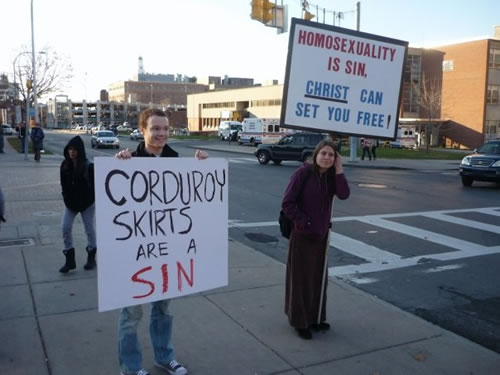
The present Western culture is largely ‘post-Christian’, fed up with the tired dogmas of the past. One common mistake made by the Christian community is to try to revamp the relevance of Christianity through massive immersion. The thought is (in an admittedly crudely-reduced form) that if we flood the world with Bibles and ‘the Gospel message’, the Christian community will finally end up back on top, like the idyllic golden age during which God was the ruler of the world. Unfortunately the Christian ideal has never been a part of reality. People may look back at post-war America in the 1950s and conclude, “That was a good time. People were decent. It was the 1960s that brought about our current distress. Abortion, homosexuality and the utter moral corruption of Western society.”
It is not my attempt to provide a thorough analysis of Western society since World War II, but I will point out that the heart of Christianity has never been about this set of morals, morals defined and packaged for Evangelical Christians by the Religious Right in the 1980s. The principal response of the Christian community seems to be pointing the finger. In his book, The Post-Christian Mind, Harry Blamires tends to point out that the problems facing the Christian community during this time are not the fault of the Christian community itself. He writes,
If we are to examine from the inside the machinery of contemporary error, we must step outside of our theological skins. Everything that gives shape and meaning to our conception of the span of human life derives from a system of beliefs that the post-Christian mind rejects. The Christian finds the ultimate meaning of things outside time, outside the boundaries of our earthly human career.
(Harry Blamires, The Post-Christian Mind [London: SPCK, 2001], 3.)
I’m afraid that Mr Blamires is mistaken on several counts. As the rest of his book points out, he generally defines “Everything that gives shape and meaning to our conception of the span of human life” as a set of morals based upon family values. For instance, he harps on the attack against the sanctity of marriage. While I agree that the value of marriage has been greatly reduced in Western society, I believe that the Christian community is largely at fault. By this, I mean that the Christian community has not demonstrated a great apologetic for marriage, giving no standard by which to critique the ‘secular’ tendency to divorce. My second main issue with Mr Blamires’ words has to do with a general presupposition concerning the utter ‘otherness’ of the Christian life, one in which we find “the ultimate meaning of things outside time, outside the boundaries of our earthly human career.” While God is most certainly greater than our realm, God is also very present and committed to time and space, which is most fully demonstrated in the Incarnation, the giving of the Holy Spirit, the advent of the Church and the rapid expansion of the universal kingdom of God.
Still, this tendency toward perceiving ourselves so fully identified with this ‘otherness’ helps the Christian community to embrace a false sense of exile. In such a way, the Christian can justify societal rejection based upon the life of Christ. Michael Frost in his book Exiles: Living Missionally in a Post-Christian Culture, writes,
I suspect that the increasing marginalization of the Christian movement in the West is the very thing that will wake us up to the marvellously exciting, dangerous, and confronting message of Jesus.
(Michael Frost, Exiles: Living Missionally in a Post-Christian Culture [Peabody, MA: Hendrickson, 2006], 9.)
This is very close to what I think we need to hear, but the language of ‘exile’ is too heavy-handed. Frost is very glad to leave what he considers the “Christendom era”. To set ourselves apart from the Christian tradition and to adopt what we consider to be ‘the message of Christ’ is dangerous. This is a mistake primarily because ‘the message of Christ’ is convoluted, and if we limit this message solely to the Scripture (as is by-and-large the practice of Protestantism) we undermine the very nature of Scripture. Scripture was not given to the Christian community as a tool by which we can live without the Church. That old Lutheran ideal, Sola Scriptura simply does not account for the robustness of the Christian presence throughout history. We are dealing with a living God and a living Church.
While Christianity is something very contrarian, we cannot accept that we are so holy and counter-cultural that exile is a result of our ‘doing things right’. The Christian community could do well by listening to the culture in a self-critical way. Unfortunately, I believe that this can be done wrong. In fact, I believe that the Christian community is experiencing its present dilemma because it has been taking the things of God, the way we rehearse the Gospel, the way we understand our role in this world, and severely altering it based upon our preconceived notions of how things should be. For instance, during the time of the Reformation, Calvinists began to wear black, not initially to express modesty, but to align the clergy with academia, showing that the Reformed priests were educated, unlike the Catholic priests who wore colourful vestments based upon the seasons within the Church year.
Changing our faith based upon preconceived notions has had far more adverse effects than the clerical wear of the Reformers, the most tragic of which I believe is the castration of the Gospel. What I mean by this is that the far-reaching effects of the Gospel have been greatly minimised in order to attend to the desires of Western culture. The culmination of Christ’s life, death and Resurrection has moved from an incredible cosmic event in which the transformation of the universe was initiated and the Church created and redeemed into a hyper-individualistic ticket to a spiritual heaven paradise. Was not the God of the Nicene Creed the God who created all things, visible and invisible?
Christianity is not a set of morals, it is not a set of mental suppositions and it is not a social programme – it is God’s transformative initiative in the universe, the Gospel. The Gospel is therefore the heart of Christianity and the heart of the Gospel is love. Perhaps the primary reason why Christianity has experienced such a drop in public sentiment is because love, and consequently the Gospel, has been corrupted and is void of much of its usefulness. Now, I will neither deny the sincerity of the entire Christian community nor the power of God as demonstrated through even the most meagre of Gospel proclamations. We are fortunate that God is far more powerful and mysterious than our systems of belief, no matter how informed or refined.
What I am going to propose will not change the fact that God is far more than we comprehend on a daily basis, but I do hope that, as should be the case in any theological endeavour, this exercise will serve to draw us as the Christian community closer to the heart of God and his mission to the world. His mission is not one of ‘add-ons’. Being a Christian is not an ‘app’ one can purchase for their iPhone. Being a Christian is neither a new t-shirt nor a whole new wardrobe. Being a Christian is a radical transformation and orientation toward the will of God.
Love is the central tenet of the Gospel – God loves the universe they created. The existence of anything is contingent upon the grace and love of God and for us God demonstrated this love most tangibly through the life, death and Resurrection of Jesus Christ. Throughout the whole of Scripture God demonstrates his love, and Christ, when asked by a Pharisee, “Teacher, which commandment in the law is the greatest?” responds, “‘You shall love the Lord your God with all your heart, and with all your soul, and with all your mind.’ This is the greatest commandment. And a second is like it: ‘You shall love your neighbour as yourself.’ On these two commandments hang all the law and the prophets.” (Matthew 22:34-40, NRSV)
In theory, the Christian community accepts most of these things with open arms, but the magnitude of what ‘love’ means is where the real weakness of the present Gospel takes shape. Perhaps a more revealing passage is found in the Sermon on the Mount,
You have heard that it was said, ‘You shall love your neighbour and hate your enemy.’ But I say to you, Love your enemies and pray for those who persecute you, so that you may be children of your Father in heaven; for he makes his sun rise on the evil and on the good, and sends rain on the righteous and on the unrighteous. For if you love those who love you, what reward do you have? Do not even the tax collectors do the same? And if you greet only your brothers and sisters, what more are you doing than others? Do not even the Gentiles do the same? Be perfect, therefore, as your heavenly Father is perfect.
(Matthew 5:43-48)
A pious Christian might call out an “Amen!” without thinking twice about this passage, but I believe a more honest response might be, “Oh shit, we’re doing it wrong.”
Indeed, the love of Christ is not some half-hearted commitment not to hate. The Christian community has a propensity to take the positive commands of God and turn them into negative commands. Instead of this radical calling ‘to love everyone’, we turn it into a meagre calling ‘not to hate anyone’. Even then we must weaken our definition of hate and say, “Well I don’t hate anyone, I simply dislike some people.” Whether we define our lack of love as ‘hate’ or ‘dislike’, we are still missing the point – we are called to love.
But we must also understand that the love of Christ is a very complex thing. God does not suspect that we will master his greatest commandment with relative ease. To love in the way that the Christian community is called to love involves a daily dependence on God’s strength and guidance by way of the Holy Spirit. We can hardly even begin to imagine what it is to love in the way that God demonstrated through Christ. Even on the Cross in the midst of his persecutors tradition maintains that Jesus requests of his ‘heavenly Father’, “forgive them; for they do not know what they are doing.” (Luke 24:34) Jesus’ love is a radical love, and it was a love that brought about massive transformation: reconciliation between God and people (‘love your God’), reconciliation between people and other people (‘love your neighbour’; ‘love your enemy’), reconciliation within individuals toward themselves and reconciliation between people and the creation. The greatest commandments can summarise this grand reconciliation. If we love God in the freedom granted by the work of Christ we will love the entirety of the creation because God has created, loved and redeemed it. This holistic reconciliation in the Gospel can be used to counter the neo-Gnostic trajectory of contemporary Christianity.
When considering the implications of these reconciliatory principles, the unfathomable depth of the love God has for us and the love that God has called the Christian community to, I believe that a it is a good exercise to seek to see it all from the perspective of the Cross.
When your significant other does not see your point of view
Remember Christ’s love on the Cross.
When your child disobeys you
Remember Christ’s love on the Cross.
When you give into the temptation yet another time
Remember Christ’s love on the Cross.
In all things
Remember Christ’s love on the Cross.
Be transformed by Christ’s love on the Cross.
+++++
Exploring and employing the implications of God’s love is an eternal task, but I end this post with these thoughts: To be a Christian is to be a subject in God’s kingdom and to be a subject in God’s kingdom requires one thing: robust obedient love. This world can only ever benefit from more love. Nothing in this world ever went bad nor will anything ever go bad because there was ‘just too much love’.
So what exactly does “postconservative evangelical (PCE) theology” look like? Some inclinations were hinted at in the “10 features of conservative evangelical theologians” in Part I of this series and Olson begins in his next chapter to sketch six features that will give a sense of the “mood” of PCE theology (you can see already the desire to elude rigid categorization, can’t you?).
Before he lists these characteristics, he delves into the issue of whether some in the Conservative Evangelical Establishment (CEE–my term, not Olson’s) would question whether PCE theologians are indeed “evangelical.” Olson answers this by proposing two “controversial theses”:
Evangelical theology is theology done by an evangelical theologian (do you wonder if he was being ironic with the word ‘controversial’?)
An evangelical theologian is someone who claims to be evangelical, is generally regarded as working within the evangelical network, and adheres to five cardinal features of evangelical faith–biblicism, conversionism, cross-centered piety, activism in evangelism and social transformation & respect for the Great Tradition of Christian belief
The second thesis might cause controversy among some in the CEE because they are uncomfortable with the confusion that exists as to who are truly evangelicals, as well as dismayed at the “rampant diversity of interpretation among evangelicals.” Olson points out a distinction that CE thinkers (such as D.A. Carson in The Gagging of God) would like to draw between “sociological evangelicalism” (those people who participate in evangelical churches, organizations, etc.) and “authentic doctrinal evangelicalism” (detailed theological orthodoxy).
While Olson acknowledges the legitimacy of concerns with doctrinal pluralism and the contemporary “desertion of the cognitive substance of faith” and he also admits that CE theologians are correct that “authentic evangelical faith includes a strong commitment to orthodox doctrine,” he holds that they are wrong “insofar as they elevate doctrinal orthodoxy to incorrigible status where it is functionally infallible and therefore equal with divine revelation itself” (which Olson sees in CE “traditionalism that enshrines [the intellectual content of] Protestant orthodoxy as it was developed in the post-Reformation period by Protestant scholastics and especially by the Old Princeton School theologians in the nineteenth century”).
Olson sees the only way to keep from raising doctrinal formulations to peer status with Scripture is “to leave a door open to doctrinal reconsideration and revision in light of Scripture [by defining] the evangelical attitude toward orthodox doctrine as one of respect and deference but not slavish adherence.” He proposes that “what makes a theologian evangelical is not strict faithfulness without mental reservation or reconsideration to doctrinal orthodoxy [but rather] that he or she works enthusiastically from within and embodies the ethos or the evangelical movement” (as defined in his 5 cardinal features above).
Olson delves briefly into a section on the two predominant approaches to American evangelical faith, or the “dual inheritance” of the “two strands of Protestantism that flowed together in the Great Awakening,” which reveals a great deal about the tension and turmoil in the contemporary Western evangelical community. The two approaches are:
Puritanism that was publicly focused, scholastic, and whose outlook on salvation was Reformed or Calvinistic, exemplified in Jonathan Edwards & influencing contemporary Reformed movements such as the Alliance of Confessing Evangelicals
Pietism that was more inwardly focused in its experientialism, with a view of salvation that was influenced by synergism and more Arminian (though predating Arminius to Melanchthon and the Anabaptists), exemplified in John Wesley & influential in the Jesus People movement of the 1970’s, the Pentecostal-Charismatic movements, as well as the emerging churches network and the house church movement
Olson points out that the “vast bulk of evangelicalism lies somewhere between these expressions, combining aspects of each” and reflecting the two often conflicting impulses of “evoking experience of God” (Pietism) and “inculcating correct beliefs” (Puritanism) He also suggests that PCE theology is “by and large a derivation of the Pietist side of the evangelical movement” and CE theology (and the fundamentalist movement preceding it) has arisen out of the Puritan ingredient.
Some of these limbs wish they had a saw...
Now we finally move to the six features of the postconservative style of doing theology (I’m not using quotes, but am condensing/editing Olson’s words in these paragraphs):
PCE theologians consider the main purpose of revelation to be transformation more than information (Note: while CE theologians would agree with the transformational goal, they would see revelation as primarily as the communication of information/facts for the purpose of creating knowledge, while PCEs wonder if knowledge is the only or best means of transforming persons). PCEs do not reject a propositional, factual, and informational aspect to divine revelation, but stress that revelation is given primarily for the purpose of redemption through personal encounter and relationship, and that nonpropositional aspects of revelation can be useful for theological endeavor. They see the Bible as not as a “book full of timeless truths” but as a vehicle that contains many types of revelation, all of which support that which is primary in Scripture: narrative. PCEs are generally enamored with narrative theology, which emphasizes the power of story to transform people in a way propositions do not, and they worry that CE theology is too caught up in the idea of cognitive Christianity to the neglect of transformation and relationship with God.
They see theology as a pilgrimage and a journey rather than a discovery and conquest and hold that the constructive task of theology is ever unfinished–there are no closed, once and for all systems of theology. A few quotes from the late PCE theologian Clark Pinnock will illustrate this point: “Why do conservatives assume that the received doctrinal paradigms created by human beings like ourselves are incapable of improvement?” and “How awfully easy it is for people who think themselves in possession of God’s infallible Word to transfer some of that infallibility to themselves. And how easy for them to respond to anyone who questions any aspect of their fortresslike position with righteous anger and adamant rejection.” PCE thinkers believe that taking risks in theological endeavor with thought experiments is not a sin and also appreciate the role of imagination in theological work.
They evidence a discomfort and dissatisfaction with the reliance of CE theology on Enlightenment and modern modes of thought. Alister McGrath points to the covert modern influence on CE theology: “Certain central Enlightenment ideas appear to have been uncritically taken on board by some evangelicals, with the result that part of the movement runs the risk of becoming a secret prisoner of a secular outlook which is now dying before our eyes.” PCEs are concerned that conservative foundationalism and propositionalism elevate something alien to revelation above revelation as the criterion of truth, reducing Christianity to a philosophy. They believe that some forms of postmodern thought can help liberate evangelical theology from the Enlightenment.
They view evangelicalism as a centered set category rather than as a set having boundaries. This means that the question is not who is “in” or “out” of evangelicalism, but who is nearer to the center and who is moving away from it (the center being Jesus Christ and the gospel & reflecting the 5 core elements above). There is no evangelical magisterium to decide who is in or out of the movement. The issue of how you can have an identity with a fuzzy boundary is responded to with the following clarification: an organization has boundaries (such as a nation, i.e. Who is an American? Any US citizen.), but a movement does not (i.e. Who is a “Westerner”? Not all Europeans or Americans are truly Westerners culturally and many people living in Asia are Westernized!). So it is with an evangelical–there is no test for determining who is an evangelical and yet we all know that not everyone who claims the label deserves it. In this, PCEs are more comfortable with possible ambiguity as to who is truly an evangelical.
They have a tendency to view the enduring essence of Christianity, and the core identity of evangelical faith, as spiritual experience rather than as doctrinal belief. Stanley Grenz argued that evangelicalism is a vision of the Christian faith expressed primarily in a distinctive spirituality, a shared experience of “convertive piety” that manifests itself in a personal, transforming relationship with Jesus Christ and is expressed communally in shared stories/testimonies, hymns, witness, and worship.
They have a tendency to hold relatively lightly to tradition while respecting the Great Tradition of Christian belief, even as they subordinate it to revelation and consider it at most a guide. Kevin Vanhoozer agrees, noting “Sola Scriptura means at least this: that the church’s proclamation is always subject to potential correction from the canon.” Two terms that could be used to describe this tendency would be “generous orthodoxy” and “critical orthodoxy.” While not eschewing doctrine, propositions, or tradition, they believe that all of these ideas are subject to the greater authority of divine revelation in Jesus Christ and in Scripture, which may at any time break forth in new light that corrects what has always been believed and taught by Christians. The PCE style demands humility, generosity, and openness of spirit in conducting the work of theology and handling the cognitive content of the faith.
These are merely sketches that Olson goes on to fill out in subsequent chapters…any thoughts on these features from our intrepid readers (i.e. those who read through to the end of this post)?
I recently clicked on a link from a blog my friend Andrew contributes to and it took me to post from a Talbot Seminary prof, Joe Hellerman, entitled “Jesus, the Shame-Bearer” about “the public humiliation of Jesus’ death.” His personal/vocational anecdote about honor-culture is skippable, but the focus on the shame Christ experienced on the cross (particularly in quotes from early church leaders) was powerful. It lead me to post the following question in his comments section:
“Years ago, I came across a poem by the British writer Stevie Smith about Christianity/ Christ that questioned our faith, including the following lines:
And Sin, how could he take our sins upon Him? What does it mean?
To take sin upon one is not the same
As to have sin inside one and feel guilty.
It is horrible to feel guilty,
We feel guilty because we are.
Was He horrible? Did he feel guilty?
The lines stuck with me, as an authentic question, but as I meditated on the issue, reading Isaiah 53, I began to wonder if, in some sense, while Jesus did not bear my experiential guilt (though he did take on my legal guilt), he somehow did bear the shame associated with my sin. In response to the poet, we might say, “No, he WAS not horrible–but yes, he FELT horrible as he bore the shame of our sin, experiencing the feeling of being a wrong-doer, though he did no wrong.”
Do you think there is a legitimacy to this? Not that we need to answer this question–I just wonder if, in some sense, this would be an answer…
I know that many Christians struggle with a lingering sense of guilt & shame over past sin. I wonder if contemplating “Jesus, the Shame-bearer” is a way of even adding those feelings of shame as something we recognize Christ bore for us.
I’m not totally sure if this is theologically accurate, though, which is why I ask!”
Hellerman responded that this (our feeling of guilt) wasn’t really what he had been talking about, which I do recognize–I was more using his meditation to launch into a related but distinct point. He was talking about Jesus’ personal sense of shame upon the cross & I was raising a question about our shame/guiltiness and Christ’s work on the cross.
On the note of Christ’s shame, it did make me think of how Christians have many times sanitized the image of Christ on the cross. With our dread of nudity, we usually drape a little cloth over his genitals or even put him in a robe, yet his shameful FULL nakedness was most likely part of the punishment he endured for us (there are some who hold the view that he was covered with a cloth, but many hold to his complete nudity)! The only film that I could remember that actually “exposed” the viewer to this aspect of the crucifixion was Martin Scorsese’s heretical and blasphemous film The Last Temptation of Christ…
Like one from whom men hide their faces; he was despised & we esteemed him not
I have been thinking more about this question–did Jesus bear on the cross the shame that should be upon me for my sin, the shame that I deserve before God for violating his good design & purposes? Or is it more that because of he took on our “legal guilt” that we are able to “draw near to God with a sincere heart in full assurance of faith, having our hearts sprinkled to cleanse us from a guilty conscience” (Hebrews 10.22)? I’d love to hear your thoughts…
Whatever the specific theological reality, I believe it’s completely appropriate to devotionally consider both what Christ endured on the cross & to know that we are free from the burden of guilt and shame of sin.
When Satan tempts me to despair,
And tells me of the guilt within,
Upward I look, and see him there
Who made an end of all my sin.
A while back, while outlining my “Reading List,” I promised I would write more about a very important book to me, namely Roger Olson’s 2007 book, Reformed and Always Reforming: The Postconservative Approach to Theology. I am now making good on that promise; however, rather than writing a short summary praising the book’s merits & interacting with any of its perceived shortcomings, I have decided (to follow Jesus!) to summarize THE ENTIRE BOOK for your consideration, which will require me to divide the posts into a number of parts.
I’m not sure how many of our dear readers would be inclined to read the book for themselves, but I’d love to interact over the specifics of the approach he outlines in the comments section—I will even try to restrict my own editorial opinion to that location—because it is an approach that I am very seriously considering taking on as my own (to some extent). To do this without input from my community would be foolhardy, in my highly-relational opinion. So without further ado, I give you my post: Reformed and Always Reforming, Part I: “Who in the What Now?”
Olson’s central thesis in the book is that “it is possible to be more evangelical by being less conservative”—speaking specifically in this book about theology, which he defines as “reflection on divine revelation in order to believe rightly and understand what is rightly believed.” He distinguishes between theology and doctrine: “theology is process; doctrine is raw material and product. Theology examines doctrines (beliefs about God) and produces doctrines, often by reaffirming, restating, or revising older ones.” The last action of “revising” is central to the postconservative approach (or “mood” as he calls it) Olson will commend.
In the book, Olson sets up what kind of conservative he is “post” by describing his understanding of “conservative evangelical theology.” The idea of being conservative is clearly connected to “adherence to tradition”—Olson posits that conservative evangelical’s (CE’s) have, perhaps unconsciously, established a “magisterium” that “exercises prior restraint over the critical and constructive tasks of theology” and while he acknowledges that many CE’s would deny this, “their conservatism shows in their tendency to slam down any and every new proposal for revisioning Christian doctrine” by an appeal to received traditional (or evangelical) beliefs.
He sees an example of a CE magisterium in the 1990 volume Evangelical Affirmations edited by Kenneth Kantzer & Carl F.H. Henry. Olson perceives that this was an attempt to preserve “evangelical integrity [by] identifying who is ‘in’ and ‘out’ of the evangelical club” through establishing “firm evangelical boundaries.” Throughout this collection of essays, “appeal is made repeatedly to…an alleged evangelical consensus” which Olson sees as something that would “be used in evangelical institutions in making decisions about hiring and continuing employment.” In essence, it looks like a power play to consolidate the authority to identify who may call themselves an “evangelical.” The problem with this is that it functionally places “a set of human statements on the same plane with scripture.”
In providing examples of specific conservative evangelical theologians, he divides them into two main camps:
Biblicist evangelicals: those who “seem concerned to protect the propositional nature of revelation as primary and [who] seem to believe it is relatively easy with training and skill to move from biblical exegisis to establishment of sound doctrine without the aid of other sources and norms such as tradition, philosophy, or culture.” They “tend to follow the methodology of 19th century Princeton theologian Charles Hodge” and Olson includes Carl F.H. Henry, J.I. Packer, Wayne Grudem, Millard Erickson, Norman Geisler, D.A. Carson and David F. Wells in this category. Their approach contains the “idea that doctrines are to be mined out of the Bible and that evangelical doctrines are simply biblical teachings and not the secondary language of the church,” as well as a “frequent appeal to an evangelical faith once and for all delivered as a negative norm for ruling out new ideas.”
Paleo-orthodoxtraditionalists: those who explicitly identify an “ancient, ecumenical doctrinal consensus” (sometimes including Reformational teachings, but usually based on the early church fathers) as a “governing authority for evangelical theology.” These thinkers include Thomas Oden, D.H. Williams, and Robert Webber.
Olson also offers 10 features that he believes are common among conservative evangelical theologians which are a cause for concern to the postconservative approach (I’m not using quotes, but am condensing/editing Olson’s words in these sentences):
A tendency to treat correct doctrine—orthodoxy—as the essence of authentic Christian faith and of evangelical faith, and a response to theological innovations as leading to apostasy.
A tendency to treat revelation as primarily propositional, glossing over the personal and eventful nature of revelations as well as the revelational power of stories, images, and speech acts.
A tendency to elevate some tradition to the status of a magisterium for evangelical theological identity (closing off fresh theological reflection & revisioning of doctrines).
A suspicion of the constructive task of theology, rejecting or neglecting attempts to construct new doctrinal formulations or reconstruct old ones & a tendency to be defensive of their understanding of orthodoxy, patrolling evangelical boundaries.
A view of evangelicalism as a bounded set category—within which it should be easy to tell who is in or out & a sense that they should have the authority to strip others of the evangelical label.
A tendency to regard the “evangelical tent” as relatively smaller than the number of those who call themselves evangelicals.
A high degree of suspicion towards both modernity (even though they may be influenced by it!) and postmodernity, which they see as relativistic and destructive of authentic Christian faith, which consists of absolutes known with a high degree of certainty.
A tendency to think that it is possible to do theology relatively uninfluenced by history and culture (antihistoricist), and a recoiling from the idea that every doctrinal and theological formulation or method is culturally embedded, as they believe in and look for a transcultural expression of the gospel.
A tendency to remain tied to fundamentalist roots (even though they would prefer not to use that term) in use of tactics such as harsh, polemical rhetoric and angry denunciations or ad hominum arguments when writing about fellow evangelicals with whom they disagree.
A tendency to do theology in the grip of fear of liberal theology and insistence on placing every theologian or theological proposal on the spectrum of left to right as defined by attitudes towards modernity, with liberal theology representing maximal accommodation to modernity.
Olson also points to two “mediating evangelical theologians” who don’t totally fit into either camp:
Donald Bloesch, whom conservatives are fond of because of his strongly confessional stance and defense of traditional doctrinal formulations, but who can also be considered progressive because he denies biblical inerrancy and leans toward Karl Barth in a form of “evangelical neoorthodoxy.”
Alister McGrath, who is also defensive of traditional orthodoxy and reluctant to express support for theological innovation, but critical of the influence of modern rationalism on theology which craves certainty through empirical-historical evidences or logical deduction from a priori truths (rational presuppositions).
Olson ends his introduction by pointing out two groups which are vying for the attention of a new generation of evangelicals: a fairly aggressive form of Reformed theology with a strongly Puritan flavor, influenced by Packer, R.C. Sproul, John Piper & Carson; and the emerging church network, led by Brian McLaren.
So now what does the postconservative approach look like? That will have to wait until the next post. However, since I’ve laid out so many names already, I will add those theologians whom Olson labels “postconservative” who are influenced by the last-generation theologians Bernard Ramm and Lesslie Newbigin, as well as philosopher Alasdair McIntyre, including: