SO, we are almost to the point where there are only TWO MONTHS left in 2010! Which means, most importantly to those of us here at LITC, that Elijah and I have but two months to put the finishing touches on our annual “best of” lists (music, film, what-not).
In anticipation of that great day when we post aforementioned lists, I have put together a little “mix CD” with what I feel is some of the best music of the year–no guarantees that ALL of these bands will be on the list, but there are good “odds” (you might say) that some of them will certainly take their place on that hallowed post. (Note: there is one track not from a release this year, a rare Jeff Buckley/Elizabeth Fraizer collaboration that I only recently came across…so it’s NEW to me!)
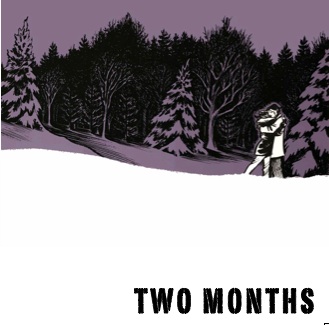
I have entitled the mix, “Two Months,” which I only the moment I began writing consciously realised was the amount of time left in the year. I have included my stab at a cover for the mix (artwork from Craig Thompson), as well as the playlist so that you may recreate the song order on your own music management software.
I have posted the songs here in my “Dropbox”–I suppose you will have to download the program to access them (I’ve officially been told you do not), but I’ve found it quite a handy way to shar–um, access my own files from separate computers. I do present these songs with the intention of promoting the artists & always encourage true music fans to obtain the original release if they find themselves in love with the songs.
1. “I Think Ur A Contra”–Vampire Weekend/Contra
2. “Tyrant Destroyed”–Twin Shadow/Forget
3. “See How Man Was Made”–Josh Ritter/So Runs The World Away
4. “We Used to Wait”–Arcade Fire/The Suburbs
5. “Sweet Talk, Sweet Talk”–The New Pornographers/Together
6. “Heart to Tell”–The Love Language/Libraries
7. “FootShooter”–Frightened Rabbit/The Winter Of Mixed Drinks
8. “I Walked”–Sufjan Stevens/The Age Of Adz
9. “Solitude Is Bliss”–Tame Impala/InnerSpeaker
10. “Never Before”–The Guggenheim Grotto/The Universe Is Laughing
11. “What Do You Think Will Happen Now?”–Owen Pallett/Heartland
12. “The Owl And The Tanager”–Sufjan Stevens/All Delighted People EP
13. “Acid Love”–Sleepy Sun/Fever
14. “All Flowers in Time Bend Towards the Sun”–Jeff Buckley & Elizabeth Fraizer/Rarities from NYC
15. “Sorrow”–The National/High Violet
16. “The Last One”–Au Revoir Simone/Still Night, Still Light
Ah, we hardly knew ye...well, we hardly knew what ye meant
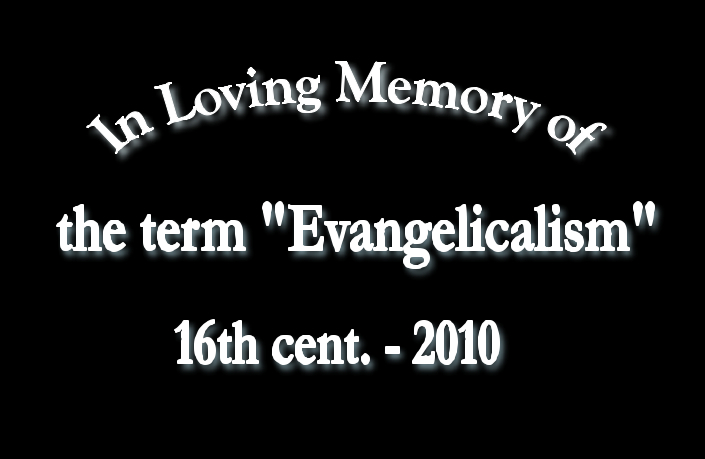
I am beginning to wonder if the time has come to retire the term “evangelicalism” from its role in describing the faith community to which I belong (or rather, less presumptuously, its role in my own self-identification). The problem with using this term at this point in history comes from its association with two different contemporary phenomena:
The term “Evangelical” has now been used in the media to describe the members of Insane Clown Posse. I quote from an article Elijah pointed me to on The Guardian website: “Insane Clown Posse have this entire time secretly been evangelical Christians.” I’m not sure what exactly in the ICP statement of faith led to using the adjective “evangelical,” but it seems like itissticking. And if you know anything about this group, we should be heading a million miles an hour in the opposite direction of anything associated with them. But beyond that, the term has also been used in connection with (almost) Koran-burning pastor Terry Jones, God-Hates-Fags-sign-holding pastor/dbag Fred Phelps, the founders and participants in the so-called “Jesus Camp,” and in reference to many more wackos and imbeciles.
On the other hand, there are a number of quite intelligent Christian groups who want to co-opt the term “evangelical” to describe ONLY those who agree with the doctrines of their particular tradition. In other words, they want to re-write the definition of what it means to be evangelical…and due to their aggressive fervor and polemical methods, they are actually succeeding to some extent! Suddenly, certain leaders, churches and organizations are declaring that Pentecostals are not “truly” evangelical, Arminians are “heretics,” theistic evolutionists are rushing headlong into apostasy, etc. and that only their doctrinally-pure tradition can safe-guard “true evangelicalism” from these heterodox movements.
Both of these appropriations of the term “evangelical” bring me to the point where I feel uncomfortable associating myself with this tradition, although evangelicalism is CLEARLY my background, these folks are “my people” in a cultural and traditional sense, and I have some inclination to maintain my affiliation with the term “evangelical” (albeit with some modifiers i.e. “post-conservative” as described here) in that it connects linguistically to “the Gospel” and historically to a Protestant heritage in which I find much to appreciate.
However, I also wonder if it might be helpful to dissociate from some of the term’s negative connotations for a period and allow a later generation to re-appropriate the term once the “ass” is removed from its “association” with these embarrassing and narrow-minded movements. It seems obvious that Christian groups have often used a variety of labels throughout the centuries to identify their faith stance (beginning with the biblical moniker: “Followers of the Way”) and perhaps it is our turn to “re-invent” ourselves in this cultural era.
If you disagree and think those of us considered evangelicals should keep the label, how would you suggest we deal with the connotations which are being attached to this term?
If you agree with me or have the slightest inclination to sympathize with this assessment…what should we begin to call ourselves (consider this a creative experiment intended more for fun–we mustn’t take this all too seriously)?
I have a few ideas, but I’d love to hear any of your thoughts first!
UPDATE: One of my main theoroes, Roger Olson, has started a blog and wrote about “Deconstructing Evangelicalism.” Here’s a pull quote that illustrates point #2 above:
Rather than practicing hospitality through dialogue and consensus-building, today’s conservative evangelicals are too concerned with excluding people. In some cases this lack of value placed on alternity borders on violence. Not physical violence but spiritual abuse which is another kind of violence.
Sufjan Steven’s new album, The Age of Adz, officially comes out on Oct. 12. For those of us anxious souls who pre-ordered the CD (myself) or vinyl (Elijah), a link to download MP3’s of the tracks was available this past Tuesday. So I have listened to the album all the way through a few times and I wanted to post my initial reaction.
First of all, I experienced quite a bit of relief in listening to the album, because I was scared that I might not like it—that it would be too experimental (a la Enjoy Your Rabbit) to satiate my Sufyearning, or that it would somehow mark a decline in his songwriting career (the kind of artistic downturn pointed out in Trainspotting).
Indeed, it is neither of these things—the truth is, rather, that I absolutely love this album. It is different than his last few LP’s, so beware of your expectations, and it takes us into a new aural and thematic territory, so you will need to submit to the album as a guide rather than following your own map of where you think the work should go (if you’ve listened to his cover of “You Are the Blood,” you’ll know what to expect). Having said that, I want to share some interpretations of The Age of Adz which may or may not be completely legitimate, but rather represent my impulsive first responses to the work.
I haven’t read any reviews yet, but I saw in some pre-release material from Asthmatic Kitty that this album was not “built around any conceptual underpinning (no odes to states, astrology, or urban expressways).” However, I don’t believe that. I think that The Age of Adz actually is a concept album, but the “theme” of the album is quite simple: it is a self-portrait. This is no stunning insight, considering song titles like “I Walked,” “Now That I’m Older,” “All For Myself,” “I Want to Be Well,” as well as his self-address in “Vesuvius” (sounding like “Sufi-yan”) and his many references to himself on the album (even apologizing for being so self-critical) I believe that this album is deeply autobiographical, taking the listener all the way from an external experience of Sufjan’s that causes him to go deeper and deeper into himself, on a tour through his emotions, thoughts, religious impulses, raw desires (“id”), and finally into his “Impossible Soul.”
Somehow, I believe, the figure on the cover of the album represents Sufjan’s self-conception. All I know about this painting is that it is the work of an “outsider artist.” Does this reveal something about the way Sufjan sees himself? An outsider? To what? The painting is primitive, even child-like, somewhat dark and cultic, but also looking like a kind of superhero–in a word, conflicted. There is a possible pun in the name: “Adz” sounds like “odds”—is he at an age where he is at odds with something (clearly there is some reference to his sense of growing older)? “Outsider,” “at odds”—these seem to hint at some deep inner tension and alienation…but from what?
The realization of this autobiographical form caused me to reflect on the fact that most of his previous songs from the past decade had been in the form of storytelling (where he used first person description not to tell his OWN story, but rather to take on a fictional persona) or worked within a structural framework of a central external concept. This is not to say there were no autobiographical songs, which one may have found on A Sun Came or Seven Swans. However, the majority of his songs were distanced from his own self-expression through portraying a fictional persona, illustrating a Biblical scene, or depicting some historical narrative. Here we find Sufjan singing straight from his own soul with no personas, no “characters.” It is a cathartic and desperate work of self-expression.
The first song, “Futile Devices,” sets up some of the formal dimensions of the work. It begins with instrumentation that might make you think this album would be quite in line with his previous albums (the guitar melody/picking reminded me of the song “A Sun Came” in particular…later in “Futile Devices.” he references that he “sounds dumb” which takes us again back to a track on his first album, “Dumb I Sound”). He even begins by singing, “It’s been a long, long time…” perhaps alluding to the time span since his last lyrically-based LP. The song introduces the central conflict of the album in his feelings for a person whom he loves very much, but to whom he cannot express his passion. In fact, he ends the song by saying “words are futile devices.” Though this will be a lyrical album, the listener must look past the words to a deeper, more ineffable expression of feeling that runs beneath than the words—I believe the intricate instrumentation and emotional passion (the cracking and stretching of his voice) evident in this album are supposed to convey what words cannot. This first song helps transition us from his “indie-folk” albums into this more experimental, electronic sound, which we find in the primordial bubbling and scratches of the first 25 seconds of “Too Much,” which felt like a sonic version of the old Disneyland ride, “Adventure Thru Inner Space,” shrinking us to fit into the writer’s inner world.
What compelling force draws me into this mysterious darkness--can this be the threshold of inner space?
Rather than analyzing song by song, I’ll just say that I perceived a great deal of internal conflict evident in the album in terms of Sufjan’s inability to express his love for someone and the deeper and more comprehensive self-analysis this feeling produces, leading to the exploration of his own emotional and spiritual complexity. I began to wonder why this was the case? What is so difficult about expressing his feelings, or why is he such a conflicted person? He says again and again in the second song, “There’s too much riding on that” in relation to the feeling of “too much love” (there is more repetition of lyrics on this album than he typically uses—perhaps revealing a hope that somehow what he feels can be revealed through saying the same thing over and over, or is it an exasperation that he can’t say what he feels, even though he says it over and over?) What is tormenting him? What is he afraid of?
Various possible explanations ran through my mind to these questions. I’ll share my intuitions, which sometimes don’t have much evidence, and am quite open to you debunking these theories (and my whole idea of the album as a self-portrait). When I get the album and lyrics, I would love to spend some more time considering the meaning and significance of this amazing album with many of my thoughtful friends…
So what are my theories to the central conflict I see in The Age of Adz? With what is he at “odds”?
Does it have something to do with his adherence to Christianity? Does he feel like an outsider due to his faith? His religious commitment results in experiences like prohibition of certain activities, guilt, and the need to confess and receive forgiveness that perhaps other friends (and potential lovers?) cannot comprehend. Perhaps he is finding himself at odds with his faith itself as it impacts his relationships? His Christian morality also (potentially) results in his celibacy (which I saw evident in the juxtaposition of the lines “I’m not fucking around” and “And I want to be”) which could produce both internal and relational tension. So then this would mean that his feelings are complex because of his unique status as a high-profile Christian in a post-Christian world. Perhaps, but this doesn’t seem like the most compelling theory to me.
Is it that he struggles with relational “attachment” (in line with the psychological notion of “attachment theory”) and so finds he cannot commit to someone even when he feels deeply attracted to them? Many of his earlier songs seemed to reveal issues with parents/family, so perhaps there are some abandonment issues or lack of relational stability in his history? This theory is more intuitive than it is substantiated by the lyrics…
Is he in love with someone who is unavailable to him? Perhaps someone who is married or uninterested in him (which I personally would find hard to believe…come on, I have a man crush on him!)? Unrequited love can be powerfully debilitating, requiring evasions and disguises to remain around the romantic object, which cause considerable emotional torment and inability to outwardly express one’s thoughts and feelings. There may be potential here.
I hesitate to offer this last theory, because it feels quite personal, but I wonder if Sufjan might be gay? This may sound sensational and I don’t mean to pry unnecessarily, but to understand this work, I have to be willing to consider this as a possibility, particularly since it would potentially be extremely difficult to experience these feelings as a Christian (consider Jennifer Knapp’s story). The first song, where the issue of undeclared love arises, seems to be written about a man. However, there is contrarily the conversation with a woman who seems to be the object of love in “Impossible Soul.” After listening to Morrissey’s repressed homosexuality for so long, I may simply be projecting this idea on Sufjan.
So those are my theories on the album for your perusal, dismissal, or development. I hope you enjoy exploring the depths of this masterful work as much as I have and will continue to do! If you do not have the MP3’s, you should go out and buy this album as soon as it comes out (and don’t file-share it for goodness sake)!!!
UPDATE: Listening another time around, with all of this in mind…my theories are on shaky ground. One intriguing song, “Get Real Get Right” contains some cheesy electronic sounds and vocal effects worthy of a segment on “Tim and Eric Awesome Show, Great Job!” and yet this is one of the more overtly “Christian” songs on the album with talk of seared consciences and getting right with the Lord. Maybe this plays into theory #1? There are some other kitschy moments on the album where a vocoder is used (similar to Imogen Heap’s “Hide and Seek” or Bon Iver’s “Woods”) along with some other robotic vocal effects (similar to a lot of 1980’s songs). Is he just having fun, or is there something in this particular choice?
ANOTHER UPDATE: There are no lyrics in the CD sleeve. Which reinforces the idea that words are “futile devices.” Now what the hell do all those paintings by the “Prophet Royal Robertson” mean in the context of this album!?
The new Deerhunter album, Halcyon Digest, was released this week and I seized the opportunity to purchase it at Avalanche during a quick trip to Edinburgh on Monday. The album as a whole is excellent and it will surely find a place near the top of my favourite records released this year. The artwork is intriguing, with the fold-out insert designed in the fashion of an underground newspaper or zine. All of the lyrics to the individual tracks are written on this insert with an additional bit before the eighth track, ‘Helicopter’. Before the lyrics this short article appears, reprinted in the album artwork with permission from Dennis Cooper:
Dima (real name Dimitry Marakov) was born in 1986 in the town of Nalchik, Russia. From a young age, he dreamed of working in the fashion industry as a designer. Lacking the moral or financial support of his parents, he actively sought out contacts within the industry through the internet. At the age of 14, he became acquainted with a successful fashion photographer in St. Petersburg who invited the boy to come live with him and work as his assistant. Dima accepted the offer and moved in with the photographer. According to friends of Dima, he became the older man’s lover for approximately the next year. He eventually grew dissatisfied with the lack of benefits he had been promised would result from the arrangement. He left the photographer to become live-in lovers with a wealthy man who provided the financial backing for a conglomerate of pornographic gay websites. It was at this point that Dimitry adopted the stage name Dima and, with the help of false documents that corrected his age to the legal 18, began a successful career modeling naked and starring in hardcore sex videos on the gay websites financed by his lover.
Between the age of 15 and 18, Dima was a highly sought after pornographic model and performer. He saved the money he made from modeling to pay for the tuition at a leading college of fashion that he hoped to attend when he reached 18. At a certain point, Dima began supplementing his income by renting himself out as an escort within his lover’s circle of associates and acquaintances. According to friends of Dima, they included several leading figures in the entertainment industry as well as one of the most powerful men in Russia’s world of organized crime. Dima began to express concern to his friends that the organized crime figure had become obsessed with him, but he refused to accept their advice to stop seeing the man because of the large amount of money these dates were earning him. Sometime in 2005, Dima abruptly left his lover, gave up his modeling career, cut off all communication with his friends, and moved in with the organized crime figure. The last public Dima sighting was late that year when his friend Ignat Lebedev, who was also working as a male escort at the time, accompanied a client to a private sex club where he claims to have witnessed a very thin and confused looking Dima being forcibly sodomized by a group of perhaps ten to fifteen men. Lebedev claims his client identified one of the men as the organized crime figure and dissuaded him from speaking to Dima for his own protection.
Lebedev claims he described what he’d seen to Dima’s former lover and was told Dima had been killed the previous week and that he shouldn’t speak of this again. Lebedev reported both incidents to the police, but after interviewing the lover and being told Lebedev had made the story up, they declined to investigate the matter. In 2006, Lebedev persuaded a prominent Russian gay journalist to write an article on Dima’s disappearance, but during the course of investigating the story, the writer was abducted by unknown assailants, beaten, and told he would be murdered if he wrote the story. Dima has not been seen or reliably heard from in three years, although in early 2007 another organized crime figure, Evgeny Ershova, who was awaiting trial on an unrelated murder charge, claimed that in late 2005 he witnessed a young male prostitute matching Dima’s description be pushed out of a helicopter over a remote forest in the north of Russia. Before Dima’s ex-lover died of lung cancer in late 2007, he reportedly confessed to friends that Dima was sold as a sex slave to a man in the Ukraine in late 2005 and had lived until late 2006 when he’d committed suicide.
The actual song—shared in the video below, which was released earlier this month—contains heartbreaking lyrics from the perspective of Dima. Principle songwriter Bradford Cox beautifully delivers these sorrowful words of exploitation, abuse, helplessness, isolation and loneliness, which prove to be all the more sobering when heard in light of the article above.
Dima’s story is incredibly heartbreaking, and while he lost his life at the hands of those who would oppress, Deerhunter reminds us of the unfathomable struggle faced by those around the world that presently experience the horror of human trafficking.
Thank you Deerhunter for speaking for those who have no voice and for doing so in such a creative and effective manner. May we all be challenged to do the same and to seek to protect all people.
The tracking site for all things viral, Buzzfeed, has just picked up on something that we here at Lost in the Cloud pointed out like MONTHS ago*, namely, the ridiculously lame choice of a cover image for the “Hipster Faith” article in Christianity Today. The more I think about it, the more I detest this book/article/subcultural label (while remaining ignorant of the whole argument, since I haven’t read the book, and with a big “no offense” to the author of said materials).
*Ok, it was less than one month, but in terms of the attention span of today’s kids, that’s like YEARS!
The same website also posted on the Calvin College decision to uninvite The New Pornographers to play at their school (a topic which my friend Rob Kirkendall thoughtfully comments upon here). I give props to whomever at Calvin invited them to come in the first place, but this decision feels like it’s just feeding the public perception of evangelical ignorance and presumptuousness. I’m sure there are so many students & faculty/staff at Calvin that hate this decision as well, so it shouldn’t reflect poorly on them (we’ll let their soteriology do that! heh-heh, um, J/K?), but really the more Christians cave in to the conservative power-brokers, the more we taint the image of what it means to follow Christ in the world…it’s time for a revolution. Perhaps, a SECOND Reformation anyone?
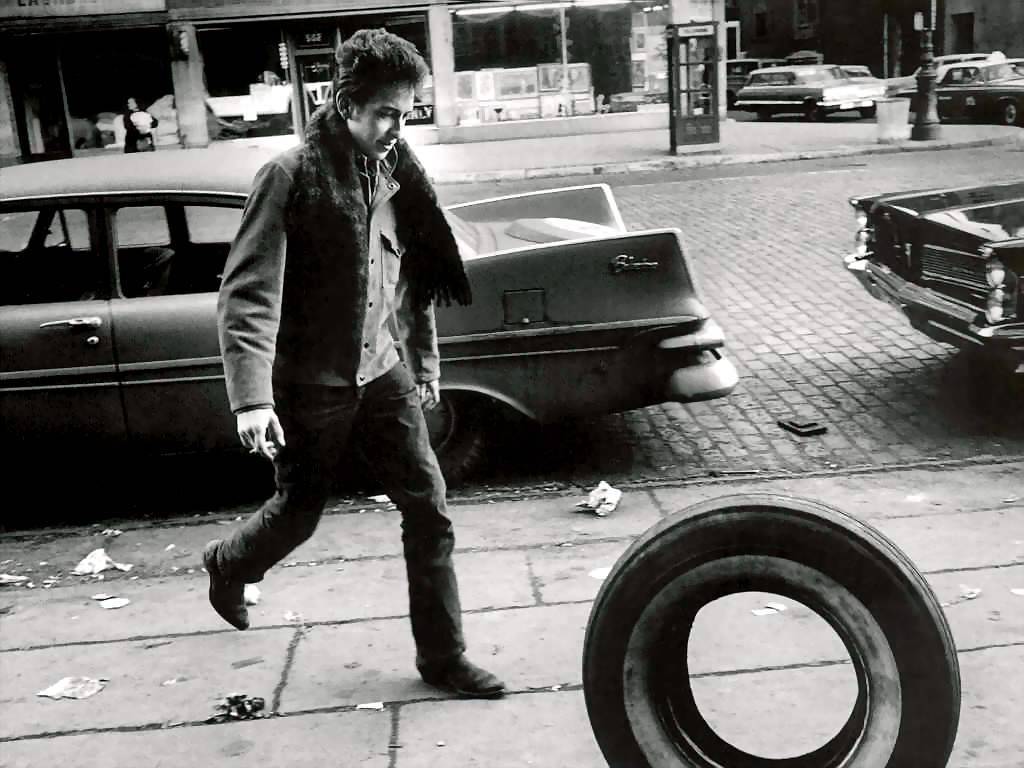
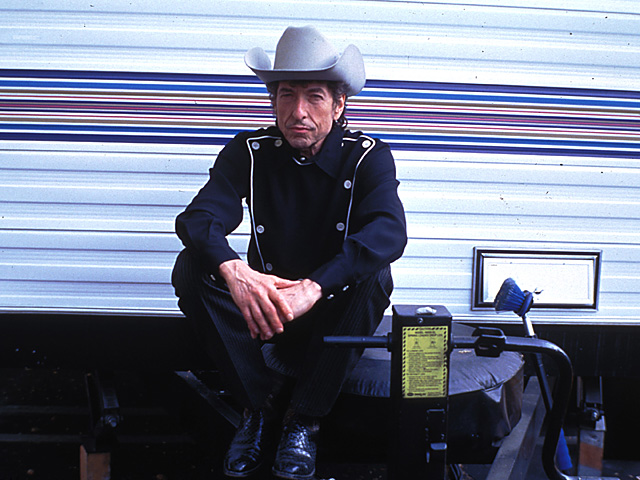
Surprise, surprise – Bob Dylan is my favourite ‘band’. From a critical perspective, Dylan’s monumental place in the history of popular music is indisputable, yet despite his massive popularity and critical enshrinement, he is and has ever been elusive, in a constant state of artistic evolution. In Martin Scorsese’s 2005 documentary No Direction Home, Dylan states, ‘I had ambitions to set out to find…this home that I’d left a while back. … I was born very far from where I’m supposed to be so I’m on my way home.’
In Greenwich Village, the epicentre of the post-McCarthy folk revival in the early sixties, Dylan would pick out which performers were ‘doing it for real’ and then pick up how they were doing it. Dylan states regarding performers he admired, ‘[There] was something in their eyes that said “I know something you don’t know” and I wanted to be that kind of performer.’ He describes the folk scene in the early 60s as divided into two camps: pop music for college kids and intellectual folk music – Dylan considered himself neither. In his 2006 autobiography Chronicles, Volume One he writes,’ There were a lot better singers and musicians around [Greenwich Village] but there wasn’t anybody close in nature to what I was doing.’ (London: Pocket Books, 18)
Eventually Dylan’s uniqueness brought him to the attention of Columbia Records’ John Hammond and although Dylan’s voice was not the standard at Columbia—home to the beautiful voices of those like Tony Bennett and Johnny Mathis—Hammond’s track record for sales convinced the executives at Columbia that Dylan would be worth their investment. It was with Columbia that Dylan’s massive repertoire (over 600 original compositions) would take off and progress over the course of the last half-century.
Throughout his career Dylan’s music has undergone several significant shifts. In 1965 he ‘went electric’ with Bringing It All Back Home. This transition brought about accusations of ‘going commercial’ for money and fame. Famously, one audience member criticised Dylan, exclaiming ‘Judas!’ during a now-infamous performance at Royal Albert Hall in 1966.
In a 1965 interview with the Chicago Daily News, Dylan stated, ‘I’ve never followed any trend, I just haven’t the time to follow a trend. It’s useless to even try.’ Instead, Dylan saw his ‘going electric’ as a natural progression from his earlier style. In No Direction Home, he states, ‘An artist has got to be careful never really to arrive at a place where he thinks he’s at somewhere. … You’re constantly in a state of becoming.’
In 1966, not long after the release of his third electric record, Blonde on Blonde, Dylan was injured badly in a motorcycle accident. ‘Truth was that I wanted to get out of the rat race,’ Dylan writes. ‘Having children changed my life and segregated me from just about everybody and everything that was going on.’ (Chronicles, 114) He refrained from touring for the next eight years, but still wrote and recorded prolifically. During this time he returned to more traditional roots and explored country music with several excellent pieces such as ‘I Dreamed I Saw St Augustine’, ‘Lay, Lady, Lay’, ‘If Not For You’ and ‘Knockin’ on Heaven’s Door’, but had not achieved a significant amount of critical or commercial success—at least anything that could be likened to the success of his earlier material—until the release of Blood on the Tracks in 1975.
Dylan describes Blood on the Tracks as a product of his ‘painting period’ in which the songs were more ‘like a painter would paint’ rather than those a musician would compose. In The Cambridge Companion to Bob Dylan, Carrie Brownstein writes, ‘By examining music from a visual perspective, with colours and lines instead of notes and chords, Dylan laid out on the canvas what would be Blood on the Tracks.’ (Kevin J. H. Dettmar, ed., The Cambridge Companion to Bob Dylan, Part I [Cambridge: Cambridge, 2009], 157).
As can be observed from many of his early influences such as Hank Williams’ ‘When God Comes and Gathers His Jewels’ and Woody Guthrie’s ‘Jesus Christ’, Dylan was not unfamiliar with the usage of religious motifs. He employed them in his own work on a regular basis, as is the case with ‘Masters of War’, ‘With God on Our Side’, ‘All Along the Watchtower’, etc. At the time, these expressions were not so much a matter of Dylan’s personal faith as they were the custom of the tradition he was drawing from and his employment of the language of a largely ‘Christian’-literate American society. But by the mid-seventies Dylan began to gain greater interest in religion and God. In a 1975 interview for People magazine Dylan expressed, ‘I’m doing God’s work. That’s all I know.’ Dylan’s interest in faith continued to grow in the late 70s and he converted to Christianity in 1978. Not long after this he began work on his first ‘born-again’ record, Slow Train Coming. Regardless of however outspoken and off-putting Dylan’s conversion might have been to many fans at the time, the single ‘Gotta Serve Somebody’ earned him his first Grammy Award for ‘Best Vocal Performance’ in 1979.
As Dylan had unwittingly become the spokesperson for the folk elitists in the early sixties, he found himself in a similar predicament with regard to the religious community in the eighties. With his 1983 release, Infidels, Dylan began distancing himself from any explicit avowal of faith and the institutions to which he was inevitably linked. After Infidels, Dylan experienced what may be considered a creative, critical and commercial lull. In 1997 he released his ‘comeback’ album Time Out of Mind, which was followed by a string of successes: “Love and Theft” (2001), Modern Times (2006) and Together Through Life (2009). In No Direction Home, artist, musician and friend of Dylan, Bob Neuwirth comments, ‘I think [Dylan] always made exactly the work he wanted to make at the time he wanted to make it. The audience came to Bob.’
While I can’t deny that his work from the mid-eighties through the early-nineties is not my favourite, the magic of Dylan’s music and his ability to constantly reinvent himself en route to ‘becoming’ have significantly shaped the way I see music and how I both personally and creatively interact with the world. Because of this profound and unparalleled impact in my life he belongs nowhere but in this number one slot.
Tarantula, an experimental novel written by Bob Dylan from 1965-6 (New York: Harper Perennial, 2005)
Dont Look Back, documentary covering Dylan’s 1965 tour of the UK, directed by D.A. Pennebaker (1967)
Festival!, documentary of the Newport Film Festival from 1963-5, directed by Murray Lenner (1967)
I’m Not There, semi-biographical film, ‘Inspired by the music and the many lives of Bob Dylan’, directed by Todd Haynes (2007)
No Direction Home, documentary on Dylan’s early life and his career prior to his touring hiatus in 1966 following his motorcycle accident, directed by Martin Scorsese (2005)
This one should be no shock to my readers. Creed is undeniably the best band in history. Why? There are countless reasons, but I need point you no further than the phenomenal 1999 song ‘What If’:
I’ve said it before and I’ll say it again: any song that repeats its own title 53 times is absolutely brilliant in my book.
No, not really – Creed is wretched. Number one will be published tomorrow and it will most likely be no surprise to faithful LITC readers…
This is worth watching (but I apologise beforehand for some of the language):
For anyone familiar with this blog, these last few rankings should come as no surprise. Elliott Smith has been the subject of two posts in the past (‘Elliott Smith, Intercessory Psalmist‘ and ‘Happy 41st, Elliott’) and is deserving of many more, including this one. Elliott’s music is extremely well-crafted, revealing a genius of a high order. His musical abilities are only overshadowed by his profoundly intimate songwriting.
In addition to his inclusion here at number two in my Top 20 Bands, I’ve also committed myself to an obsessive Top 50 Elliott Smith Songs list. His 2000 record Figure 8 was ranked as my third favourite record released between 2000 and 2009. Along with Figure 8, two more of his records can be found on my Top 50 Albums list: Elliott Smith (1995) and Either/Or (1997).
‘Between the Bars’ from the album Either/Or, live recording from the 1997 short film Lucky Three:
This tender Glaswegian troupe (with the exception of Richard, who still technically lives in Perth) has released some of what I consider to be the best pop music in history throughout their 1.5 decades. They are deserving of far more praise that I am able to adequately express. Although I might have been initially reluctant toward some, I have yet to ultimately be disappointed by a Belle & Sebastian release. While their latest records have generally stepped up a notch in tempo and production (leaving some ‘purist’ fans with a feeling of alienation), their exceptional songwriting remains.
Be a child, be an adult, go to college, get a job, fall in love, fall out of love, lose your faith just to gain it back – Belle & Sebastian suits all of life’s circumstances. Two of their records can be found on my Top 50 Albums list: Tigermilk (1996) and the greatly underrated Fold Your Hands Child, You Walk Like A Peasant (2000).
Make sure to keep your eyes and ears open for their upcoming release, Belle and Sebastian Write About Love, which will be available on 11 October in the UK and the following day in North America.
‘The Boy With the Arab Strap’ from the 1998 album of the same name, live on Later…with Jools Holland in 2001:
‘I Want the World to Stop’ from the forthcoming Belle and Sebastian Write About Love:
(I must brag that I was actually present at this video recording.)
Now that we’re into the last four of my Top 20 Bands list I figured I’d share each band individually.
4. Radiohead (UPDATE: moved to number 5)
It feels incredibly cheap to write about most of the bands in my Top 20 list because they’ve been written about so many times before (though to my fault I don’t often feel such trepidation when approaching talk of the Almighty…). My number four pick, Radiohead, is probably one of the more difficult of all to actually write about because I suspect—without having done any formal research—that it is the most widely commented about band on the internet, ever. I will state that while I am not especially thrilled by the solo projects that various members of the band have embarked upon in recent years, Radiohead is an absolutely amazing group, constantly pushing the boundaries and reshaping the landscape of popular music and how that music is experienced, whether that be through innovative packaging, the way that music is exchanged, brilliant music videos, phenomenal live performances, etc. I love every Radiohead song released since their 1997 album OK Computer, which along with Kid A/Amnesiac (2000/1) can be found on my Top 50 Albums list. The grouping of Kid A/Amnesiac was also my favourite album released in the previous decade.
In a recent essay published here, bassist Colin Greenwood reveals that the band has finished recording their newest record and is in the process of deciding how exactly to release it after their groundbreaking self-release of In Rainbows in 2007 (which the band initially sold the record in digital form at a price determined by the customer).






 Lost in the Cloud